
Search
Did you mean: Tarquinia?
Remove Ads
Advertisement
Search Results

Interview
Interview with Greg Woolf
Join World History Encyclopedia as they talk to author and professor Greg Woolf all about his book Rome: An Empire's Story, Second Edition, published by Oxford University Press. Kelly (WHE): Do you want to just tell everyone...

Image
Map of the Late Bronze Age Mediterranean Trade Networks - Trade, Diplomacy & Interdependence, c. 1400–1200 BCE
Between c. 1400 and 1200 BCE, the eastern Mediterranean and Aegean formed a densely interconnected system of exchange linking the Mycenaean palace states...

Image
Map of the Phoenician Trade and Colonization, c.1100-600 BCE - Trade, Colonies & Maritime Networks Across the Mediterranean
Between c. 1100 and 600 BCE, the Phoenician city-states of the Levant, especially Tyre, Sidon, Byblos, and Arwad, developed one of the ancient...

Image
Map of the Kingdom of the Vandals (435–534 CE)
The Kingdom of the Vandals and Alans (435–534 CE) emerged as one of the most significant post-Roman states in the western Mediterranean. Founded after the Vandals, a Germanic people originally from Central...

Image
Map of Europe after the War of the Austrian Succession, 1748 - Dynastic Rivalry and Balance of Power
The War of the Austrian Succession (1740–1748) reshaped the political balance of Europe after the death of Charles VI, Holy Roman Emperor (reign 1711–1740) and...
Image
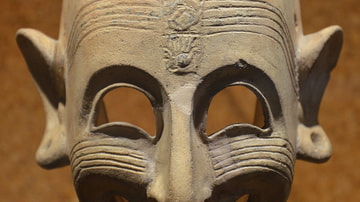
Phoenician-Punic Grinning Mask
Phoenician grinning mask, 4th century BCE, found in a grave at San Sperate in Sardinia. Masks like these were used to ward off evil. (Cagliari Museo Archeologico Nazionale)
Image
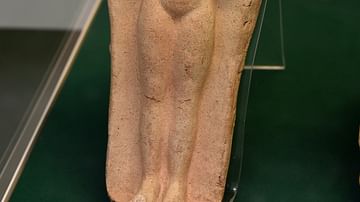
Goddess Astarte Votive Plaque
This is baked clay votive plaque of a nude woman in low relief, most likely the goddess Astarte. Her Egyptian style wig was painted black. She puts her hands at her breasts. The hole at the top is for suspension. This...

Image
Map of the Vandalic War
Map of the operations of the Vandalic War in 533-534, including the rebellions on Tripolitania and Sardinia.
Image
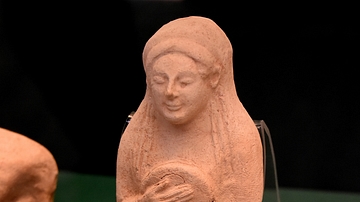
Phoenician Tambourine Player from Tharros
This is a baked clay votive figurine of woman playing a tambourine. The curls of her hair show a Greek influence. The Canaanite traditions of terracotta figurine manufacturer were continued by the Phoenicians...
Image
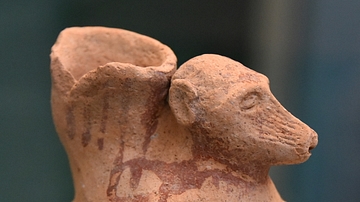
Zoomorphic Jug from Tharros
This is a pottery jug in the form of a squatting baboon-like monkey carrying a net on his back. Phoenician, 6th century BCE. From Grave 5/35 at Tharros, Sardinia, modern-day Italy. (The British Museum, London)
