
Search
Remove Ads
Advertisement
Search Results
Image
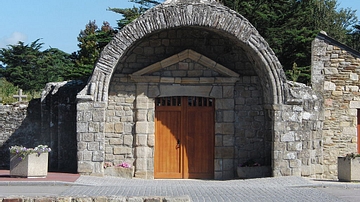
Monastery of Saint-Gildas-de-Rhuys
The entrance to Saint-Gildas-de-Rhuys monastery, founded by the Romano-British monk Gildas in the 6th century CE. Morbihan, France.

Image
Saint Walpurga
Altarpiece of St. Martinskirche, Messkirch, Germany, depicting Saint Walpurga (also given as Walburga), c. 1535-40 CE.
Philadelphia Museum of Art.

Image
The Crucifixion of Saint Peter by Caravaggio
Oil on canvas painting The Crucifixion of Saint Peter by Caravaggio, 1601 CE.
Cerasi Chapel, Santa Maria del Popolo, Rome.

Image
Bell Tower of Saint Sophia Cathedral, Kyiv
Bell tower of Saint Sophia Cathedral, Kyiv, built in the Cossack Baroque style between 1699-1706, funded by Hetman Ivan Mazepa. The height of the bell tower is 76 metres.
Image
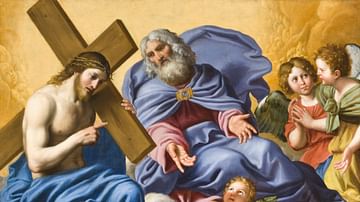
Saint Ignatius of Loyola's Vision of Christ and God the Father at La Storta
Saint Ignatius of Loyola's Vision of Christ and God the Father at La Storta, oil on canvas by Domenichino, c. 1622.
Los Angeles County Museum of Art.

Image
The Development of Slavonic Literacy & the Cyrillic Alphabet - The Cultural Transformation of Eastern Europe, c. 863-900
The missions of Saints Cyril and Methodius transformed the religious and cultural development of Central and Eastern Europe during the 9th century...
Article
The Daily Life of Medieval Monks
Life for monks in a medieval monastery, just like in any profession or calling, had its pros and cons. While they were expected to live simply with few possessions, attend services at all hours of the day and night...

Article
St. Augustine: from The Literal Meaning of Genesis
Saint Augustine of Hippo (354-430 CE) most famous for his work Confessions and his City of God, is regarded as one of the Fathers of The Church in the tradition of Catholicism. In this brief essay from...

Article
The Integration of Church and State in the Roman Empire
In the ancient world, "religion" and society were not separate entities. Various gods dictated covenants, "law-codes," and social conventions. Such law-codes were most often the responsibility of...

Definition
Theophilos
Theophilos was emperor of the Byzantine Empire from 829 to 842 CE. He was the second ruler of the Amorion dynasty founded by his father Michael II. Popular during his reign and responsible for a lavish rebuilding of Constantinople's...
