
Search
Remove Ads
Advertisement
Search Results

Definition
Visigoth
The Visigoths were the western tribe of the Goths (a Germanic people) who settled west of the Black Sea sometime in the 3rd century CE. According to the scholar Herwig Wolfram, the Roman writer Cassiodorus (c. 485-585 CE) coined the...

Article
Roman Games, Chariot Races & Spectacle
If there was one thing the Roman people loved it was spectacle and the opportunity of escapism offered by weird and wonderful public shows which assaulted the senses and ratcheted up the emotions. Roman rulers...

Article
Roman Expeditions in Sub-Saharan Africa
Sub-Saharan Africa was explored by Roman expeditions between 19 BCE - 90 CE, most likely in an effort to locate the sources of valuable trade goods and establish routes to bring them to the seaports on the coast...

Article
Gibbon's Decline & Fall of the Roman Empire
The English historian Edward Gibbon (1737-1794) wrote and published his seminal work History of the Decline and Fall of the Roman Empire between 1776 and 1788. The dominant theme of Gibbon's six-volume work...

Article
Ancient Roman Society
Rome began as a small city on the banks of the Tiber River in Italy. The Latin tribes (also known as the Latini or Latians) inhabited the region c. 1000 BCE but the founding of the city is dated to 753 BCE. The family was...

Article
Hellenistic & Roman Agora of Athens
Pericles’ agora of Athens flourished under Macedonian control. After Macedon was defeated by Rome, the Romans added to the district even before Greece was taken as a province and more so afterwards. The Roman version...

Article
Banking in the Roman World
Just as in other ancient civilizations, the first banks in Rome began in the temples consecrated to the ancient Gods. Many temples held in their basements the Romans' money and treasure, and were involved in banking activities...

Article
Legions of Spain, Roman Africa & Egypt
The legions of Spain, Roman Africa, and Egypt did not see the intensity of action that prevailed elsewhere in Europe. However, the presence of these four legions - VII Gemina, IX Hispana, XXII Deiotariana, and...
Definition
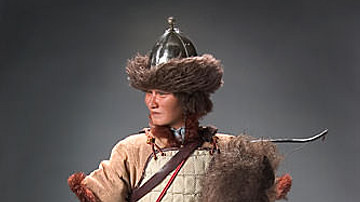
Attila the Hun
Attila the Hun (r. 434-453 CE) was the leader of the ancient nomadic people known as the Huns and ruler of the Hunnic Empire, which he established. His name means "Little Father" and, according to some historians, may not have...

Article
Legacy of the Ancient Romans
The legacy of the ancient Romans – from both the time of the Roman Republic (509-27 BCE) and the time of the Roman Empire (27 BCE - 476 CE) – exerted a significant influence on succeeding cultures and is still felt around...
