
Search
Remove Ads
Advertisement
Search Results

Article
The Temple of the Emerald Buddha
A small carved figurine sits high on a grand multi-tiered pedestal in a magnificent wat (temple) in Bangkok, Thailand. It has been sitting there since 1784 CE and was originally thought to be made of emerald. Hundreds...

Article
Chariots in Ancient Indian Warfare
The chariot was the elite arm of ancient Indian armies in the Vedic (1500 BCE – 1000 BCE) and Epic periods (described by the Ramayana and the Mahabharata, 1000-600 BCE) because of the advantages it conferred and...

Article
Hoysala Architecture
The Hoysala era (1026 CE – 1343 CE) was marked by illustrious achievements in art, architecture, and culture. The nucleus of this activity lay in the present day Hassan district of Karnataka, India. The most remarkable accomplishment...
Article
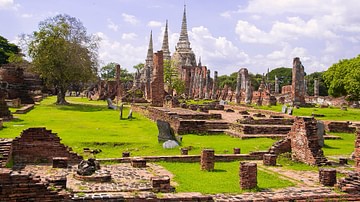
Ayutthaya: Venice of the East
The royal city of Ayutthaya (ah-you-tah-ya) was a small kingdom in Siam (modern Thailand), and it was an unrivalled commercial and maritime power from 1350-1767 CE. Ayutthaya became the second capital of Siam in 1438...
Article
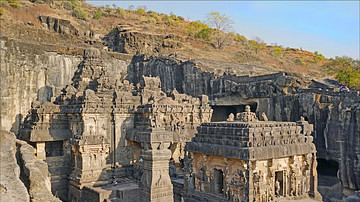
Ellora Caves
Ellora (also known as Elura and, in ancient times, as Elapura) is a sacred site in Maharastra, central India. The Ellora Caves are listed by UNESCO as a World Heritage Site and is celebrated for its Hindu, Buddhist, and Jain temples...
Article
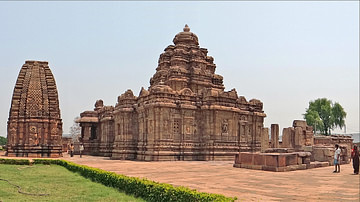
The Temples of Pattadakal
The history of Pattadakal goes back to a time when it was called Kisuvolal, a valley of red soil. It even found a mention in Ptolemy's Geography in the 2nd century CE. Presently Pattadakal is located in the district of...

Article
Depictions of India in Ancient Literature
Herodotus (484 BCE – c. 425 BCE) has been called the Father of History since he was the first historian known to collect his materials in detail, test their accuracy to a certain extent and arrange them in...

Article
Naval Warfare in Ancient India
The navy in ancient India carried out three roles: it was used to transport troops to distant battlefields, participate in actual warfare, and was primarily meant for protecting the kingdom's trade on sea and navigable...

Image
Rama, Lakshmana & Surpanakha
A relief scene from the Ramayana where Lakshmana cuts off the ears and nose of the demoness Surpanakha while Rama looks on from the left with his bow. Gupta period from Deogarh, Uttar Pradesh. (National Museum, New Delhi...

Definition
Tukulti-Ninurta I
Tukulti-Ninurta I (reigned 1244-1208 BCE) was a king of the Assyrian Empire during the period known as the Middle Empire. He was the son of Shalmaneser I (reigned 1274-1245 BCE) who had completed the work of his father, Adad...
