
Search
Remove Ads
Advertisement
Search Results

Image
Almourol Castle, Arrow Loop
One of the many strategically placed defensive arrow loops found throughout the walls and keep of Almourol Castle, photograph by Filipa Oliveira, Almourol, Portugal, May 2026.
Image
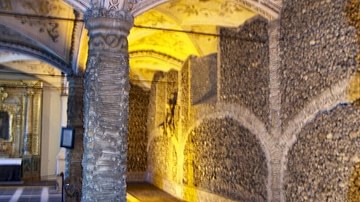
Capela dos Ossos (The Chapel of Bones)
Capela dos Ossos (The Chapel of Bones) attached to the Igreja de São Francisco, Evora, Portugal. The Chapel of Bones was constructed by Franciscan monks in the late 16th century CE. Photo taken 2009 CE.

Image
Almourol Castle, Inner Alure
One of the inner alure (wall-walk) walls separates the first bailey from the second, providing extra security for the keep area, photograph by Filipa Oliveira, Almourol, Portugal, May 2026.
Image
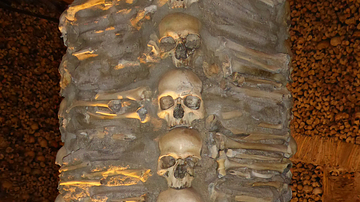
Capela dos Ossos Bone Pillar
Pillar at the Capela dos Ossos (Chapel of Bones), Evora, Portugal showing human skulls and bones. The Chapel of Bones was constructed by Franciscan monks in the late 16th century CE. Photo taken 2016 CE.
Image
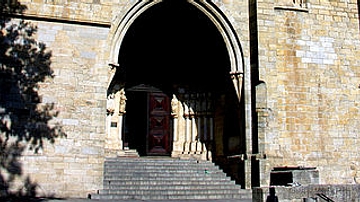
Evora Cathedral
The great (main) door of Evora Cathedral, Evora, Portugal. Photo taken 2006 CE.
Image
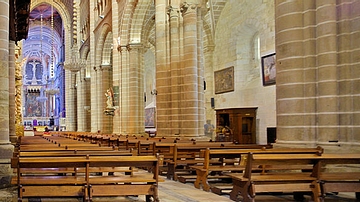
Interior of Evora Cathedral
Interior of Evora Cathedral, Evora Portugal. Photo taken 2011 CE.
Image
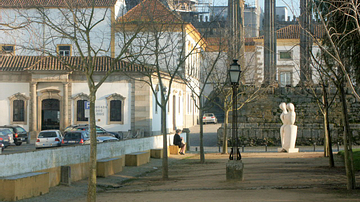
Temple of Diana
The Roman temple of Diana in Evora, Portugal. Constructed in the 1st century CE. Photo shows temple in relation to other buildings in Largo Conde Vila Flor square. Photo taken in 2008 CE.
Image
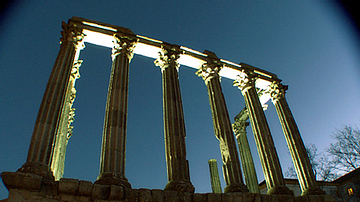
Temple of Diana
Temple of Diana in Largo Conde Vila Flor Square Evora, Portugal - night photo. The temple was constructed in the 1st century CE. Photo take 2005 CE.

Image
Invitation Figure
The Baroque (c. 1600-1750 CE) and Rococo (c. 1700-1800) movements led to a style of azulejos (glazed ceramic tile) that is unique to Portugal – figuras de convite or invitation figures. These were ornate life-size figures, usually...
Image
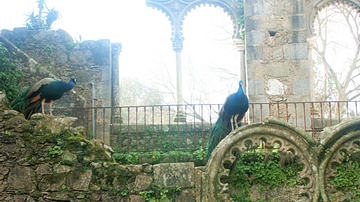
Peacocks in Jardim Publico de Evora
Peacocks in Jardim Publico de Evora (Evora Public Garden), Evora, Portugal. Photo taken in 2008 CE.
