
Search
Remove Ads
Advertisement
Search Results

Definition
Roman Egypt
The rich lands of Egypt became the property of Rome after the death of Cleopatra VII in 30 BCE, which spelled the end of the Ptolemaic dynasty that had ruled Egypt since the death of Alexander the Great in 323 BCE. After the murder...

Definition
Caesarion
Ptolemy XV Caesar “Theos Philopator Philometor” (“the Father-loving Mother-loving God”) (c. 47-30 BCE), better known by his unofficial nickname Caesarion or “Little Caesar” in Greek, was the oldest son of Cleopatra VII (69-30 BCE...

Definition
Alexander Helios
Alexander Helios (40 BCE – c. late 1st century BCE) was a member of the Ptolemaic dynasty, the second oldest son of Cleopatra VII (69 BCE – 30 BCE) and the twin brother of Cleopatra Selene II (40 BCE – 5 BCE). He spent the majority...

Definition
Augustus
Augustus Caesar (27 BCE - 14 CE) was the name of the first and, by most accounts, greatest Roman emperor. Augustus was born Gaius Octavius Thurinus on 23 September 63 BCE. Octavian was adopted by his great-uncle Julius Caesar in 44...
Definition
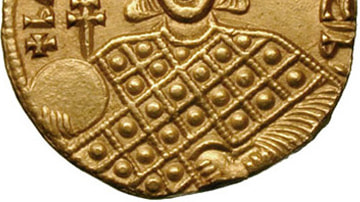
Basil I
Basil I was emperor of the Byzantine Empire from 867 to 886 CE and he founded the "Macedonian" dynasty which lasted for over 200 years. Basil was an Armenian from a humble background who had risen to become the second most powerful man...

Article
Causes of the Wars of the Roses
The Wars of the Roses (1455-1487 CE) was a series of dynastic conflicts between the monarchy and the nobility of England. The 'wars' were a series of intermittent, often small-scale battles, executions, murders, and...

Article
Twelve Famous Women of the Middle Ages
Women in the Middle Ages were frequently characterized as second-class citizens by the Church and the patriarchal aristocracy. Women's status was somewhat elevated in the High and Late Middle Ages by the cult...

Definition
British Crown Jewels
The Crown Jewels of the monarchy of the United Kingdom of Great Britain and Northern Ireland are today kept in the Tower of London and date mostly to the 17th century, with a few later sparkling additions such as the Koh-i-Noor...

Definition
James IV of Scotland
James IV of Scotland ruled as king from 1488 to 1513. He succeeded his father James III of Scotland (r. 1460-1488) and became one of the most popular of the Stuart kings. James sought to apply justice in every corner of his...

Definition
Charles V, Holy Roman Emperor
Charles V, Holy Roman Emperor (24 February 1500 to 21 September 1558) reigned from 1519 until his abdication in 1556 and was one of the most powerful rulers in the history of the Habsburg dynasty. Through a series of...
