
Search
Remove Ads
Advertisement
Search Results

Definition
Samo
Samo (reigned 623/624-658 CE) was a king of the Slavs who was responsible for the foundation of the first recorded political entity of the Slavic people, usually referred to as Samo's Empire. Since writing was not introduced into Slavic...

Definition
Cilicia
Cilicia is the ancient Roman name for the southeastern region of Asia Minor (modern-day Turkey). It is referenced in the biblical books of Acts and Galatians, was the birthplace of Saint Paul, and the site of his early evangelical missions...

Definition
Italo-Ethiopian Wars
Italy occupied Ethiopia for five years, from 1935 to 1941, following a mass-scale invasion launched by the fascist dictator Benito Mussolini (1883-1945). However, Ethiopia had been a long-aimed colonial objective of Italy...
Definition
Bayan I
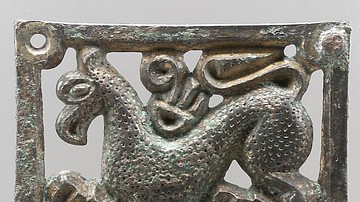
Bayan I (reigned 562/565-602 CE) was a king of the Avars, a confederation of heterogeneous people who migrated from the region of Mongolia, north of China, in 552 CE and came in contact with the Eastern Roman Empire c. 557 CE. Bayan...

Definition
Vespasian - The Commoner Who Became Roman Emperor
Vespasian (9-79 CE) was Roman emperor from 69 to 79 CE. Despite his low birth, he worked hard to rise through the ranks of Roman politics and eventually achieved prominence as a military commander. He...

Definition
House of Burgesses
The House of Burgesses (1619-1776 CE) was the first English representative government in North America, established in July 1619 CE, for the purpose of passing laws and maintaining order in the Jamestown Colony of Virginia and...

Definition
Pliny the Younger
Pliny the Younger (61-112 CE) was the nephew of Pliny the Elder (23-79 CE), the author of the 37-volume Natural History. He had a remarkable political career and gained a reputation as an excellent lawyer and orator, but he is...

Definition
Francis Bacon
Francis Bacon (1561-1626) was an English philosopher, statesman, and author. Bacon is often considered one of the founders of modern scientific research and scientific method, even as "the father of modern science" since he proposed...

Definition
Tiberius - The Reclusive Roman Emperor
Tiberius (42 BCE to 37 CE) was the second Roman emperor, who reigned from 14 to 37 CE. The adopted son of Augustus, he led a long and tormented life of service to the Roman Empire before becoming princeps (emperor...

Definition
Western Astrology
Western astrology refers to a form of divination based on the motion of astronomical objects such as stars or planets. The belief that astronomical objects are divine or influence events on Earth is found in many cultures, but...
