
Search
Remove Ads
Advertisement
Search Results

Image
Polada Culture Pot
Clay pot, Polada Culture, Abitato del Lavagnone, Bronze Age, 1800-1600 BCE.
Giovanni Rambotti Civic Archaeological Museum, Desenzano del Garda, Italy.

Image
Nazca Double-spouted Pot
A typical double-spouted pot with handle of the Nazca civilization of ancient Peru (200 BCE-500 CE). The design is also typical of Nazca art: Bold lines and colours, often depicting mythical transformational creatures...
Image
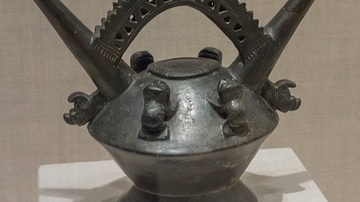
Lambayeque Double-spouted Pot
A double-spouted pot in silver, made in imitation of pottery examples. From the Lambayeque Civilization of northern Peru, 900-1375 CE. (Art Institute of Chicago)

Image
Norse Cooking Pot
Remnants of a Viking cooking pot
Royal Ontario Museum, Toronto, Canada, 2017
Image
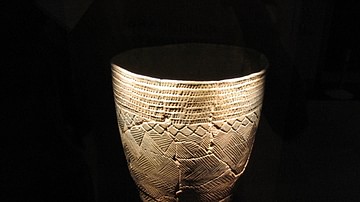
Korean Neolithic Pot
A typical pottery bowl from the Korean Neolithic period with pointed base and simple incised decoration. (National Museum of Korea, Seoul, South Korea)

Image
Mixed Flowers in an Earthenware Pot by Renoir
An 1869 oil on canvas still-life, A Vase of Flowers, by Pierre-Auguste Renoir (1841-1919) the French impressionist painter. Renoir was keenly interested in painting flowers throughout his career and found...

Article
Sioux Life Lessons: Iktomi and the Muskrat & Iktomi's Blanket
The Sioux stories known as Iktomi tales concern the trickster figure Iktomi (also known as Unktomi) who appears, variously, as a hero, sage, villain, clown, inept buffoon – or in other roles...
Definition
Leprechaun
Leprechauns (also leprecauns or lepracauns) are figures in Irish folklore who guard hidden treasure. Regarded as small and incredibly agile male fairies or goblins, they most often guard a pot of gold. Leprechauns live solitary lives...

Article
Food & Drink in the Elizabethan Era
Food and drink in the Elizabethan era was remarkably diverse with much more meat and many more varieties of it being eaten by those who could afford it than is the case today. Storage of food was still a problem...

Definition
Barnhouse Settlement
The Barnhouse Settlement is a Neolithic village located in Antaness, Orkney, Scotland, which was inhabited between c. 3300 and 2600 BCE. The present designation of 'Barnhouse' comes from the name of the farmland on which the...
