
Search
Did you mean: Plebeians?
Remove Ads
Advertisement
Search Results

Definition
Mesopotamian Government - Helping and Serving the Gods
Ancient Mesopotamian government was based on the understanding that human beings were created to help and serve the gods. The high priest, king, assembly of elders, governors, and any other officials were recognized as stewards chosen by...

Definition
Solon
Solon (c. 640 – c. 560 BCE) was an Athenian statesman, lawmaker, and poet, who is credited with restructuring the social and political organisation of Athens and thereby laying the foundations for Athenian democracy. Such were his accomplishments...

Definition
Gaius Marius
Gaius Marius (c. 157-86 BCE) was an accomplished military commander and politician who was acclaimed for saving Rome from the brink of collapse. Yet, unfortunately, his name has only survived in relative obscurity because his achievements...
Definition
Pontius Pilate
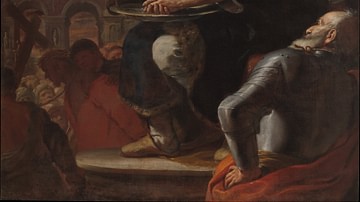
Pontius Pilate was the fifth magistrate to serve in the Roman province of Judea, created in 6 CE by Roman emperor Augustus (r. 27 BCE to 14 CE). His term of office was during the subsequent reign of Tiberius from 26-36 CE. He became famous...

Definition
Centurion
The centurion (centurio in Latin) was an officer in the Roman army whose experience and valour were a crucial factor in maintaining order on the battlefield and ensuring Rome's military successes spanned over centuries. A centurion commanded...
Definition
Cato the Elder
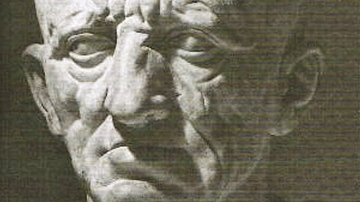
Marcus Porcius Cato, better known as Cato the Censor or Cato the Elder (234-149 BCE), was an influential political figure of the Roman Republic. Serving as quaestor, aedile, praetor, consul, and censor, he championed Roman virtues and detested...

Article
Views of the Afterlife in Roman Tombstone Inscriptions
Ancient views of the afterlife are reflected in literature, tomb inscriptions, and grave goods. Then, as now, a belief in another stage of existence after death was a shared belief by all ancient societies. Initially, the Greco-Roman Hades...

Image
Government of the Roman Republic
This infographic illustrates the government of the Roman Republic (c. 509–27 BCE), a political system that combined elements of monarchy, aristocracy, and democracy. Over nearly five centuries, the Republic developed institutions designed...
