
Search
Did you mean: Texcoco?
Remove Ads
Advertisement
Search Results

Definition
Centurion
The centurion (centurio in Latin) was an officer in the Roman army whose experience and valour were a crucial factor in maintaining order on the battlefield and ensuring Rome's military successes spanned over centuries. A centurion...
Definition
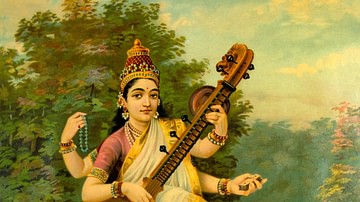
Saraswati
Saraswati (also Sarasvati) is the Hindu goddess of learning, wisdom, music, and aesthetics. She is also known as Bharati (eloquence), Shatarupa (existence), Vedamata ('mother of the Vedas'), Brahmi, Sarada, Vagisvari, and Putkari...

Definition
Ganesha
Ganesha (also Ganesa or Ganapati) is one of the most important gods in Hinduism. Ganesha is easily recognized with his elephant head and human body, representing the soul (atman) and the physical (maya). Ganesha is the patron of writers...

Definition
Hebe
Hebe (meaning "youth" or "bloom of youth") is the goddess and personification of eternal youth in Greek mythology. She is the daughter of Zeus and Hera and the wife of the Greek hero Hercules. Hebe serves as the cupbearer for the gods...

Definition
Year of the Four Emperors - When Four Men Battled For Control of the Roman Empire
The Year of the Four Emperors (69 CE) was a brief period of political upheaval and civil war in the Roman Empire. In the aftermath of the death of Emperor Nero, four men – Galba...

Definition
Delhi Durbar
The Delhi Durbar was a spectacular public event held in India to commemorate the accession of a new British monarch to the title Empress or Emperor of India. Three Delhi Durbars were held: 1877, 1903, and 1911. The event involved...

Definition
Marcus Gavius Apicius
Marcus Gavius Apicius, a wealthy and educated member of the Roman elite who lived during the reign of Emperor Tiberius (14-37 CE), is famous for his love of food and a cookbook titled De Re Coquinaria (The Art of Cooking...

Article
Medieval Knights: 12 of the Best
The knights of medieval Europe were meant to be the finest fighting men of their age, even more important, they were expected to be pure in thought and deed, as exemplified in the chivalrous code which they (usually...
Article
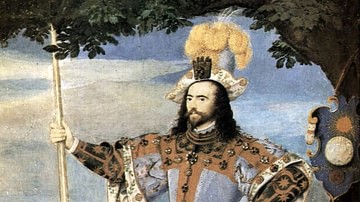
Clothes in the Elizabethan Era
Clothes in the Elizabethan era (1558-1603 CE) became much more colourful, elaborate, and flamboyant than in previous periods. With Elizabeth I of England (r. 1558-1603 CE) herself being a dedicated follower of fashion...

Article
The Armour of an English Medieval Knight
English medieval knights wore metal armour of iron or steel to protect themselves from archers and the long swords of opponents. From the 9th century CE, chain mail suits gave protection and freedom of movement...
