
Search
Did you mean: Oceanus?
Remove Ads
Advertisement
Search Results

Article
The Impact of the British Industrial Revolution
The consequences of the British Industrial Revolution (1760-1840) were many, varied, and long-lasting. Working life in rural and urban settings was changed forever by the inventions of new machines, the...

Article
Wreck of the Batavia
The Batavia was a Dutch East India Company ship that foundered on the coral reefs of the Houtman Albrolhos Islands, 60 kilometres (37 mi) off the coast of Western Australia, just before dawn on 4 June 1629. It was the flagship...
Article
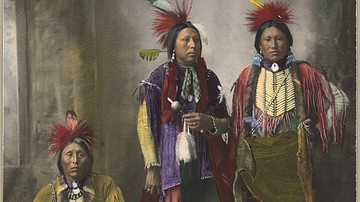
Saynday Tales
Saynday tales are popular legends of the Kiowa nation featuring the trickster figure Saynday who, like other Native American tricksters, sometimes appears as a hero, sometimes as a villain, and other times as a clownish buffoon...

Article
Battle of Isandlwana - The Zulu Victory over the British Empire
The Battle of Isandlwana on 22 January 1879 was the opening encounter of the Anglo-Zulu War and a famous Zulu victory against the British Army. Over 25,000 Zulu warriors attacked and destroyed...

Article
Trade in the Roman World
Regional, inter-regional and international trade was a common feature of the Roman world. A mix of state control and a free market approach ensured goods produced in one location could be exported far and wide. Cereals...

Image
5 Famous Ships of the Age of Exploration - From Dias to Magellan, 1487–1522
The Age of Exploration (15th–16th centuries) was driven by advances in shipbuilding, navigation, and maritime ambition that allowed European sailors to venture farther into the Atlantic...

Image
SS Great Britain
SS Great Britain, a museum ship and former passenger steamship now located in Bristol. It was the largest passenger ship in the world from 1845 to 1854. Made by Brunel, for the Great Western Steamship Company's transatlantic service...

Image
Map of European Exploration of Africa, c. 1434-1877 - From Coastal Voyages to Continental Expeditions
From the voyages of the Portuguese navigators under the patronage of Henry the Navigator in the 15th century to the transcontinental expeditions of Henry Morton...

Image
Twelve Spices That Changed the World - Trade, Empire, and the Global Age of Spices, 1450–1650
Between c. 1450 and 1650, demand for spices and other high-value plant commodities became an important catalyst for European maritime expansion. Pepper, cinnamon, cloves...

Book Review
Conquering the Ocean: The Roman Invasion of Britain
“Why should a distant island beyond the north-western edge of the Roman Empire have become the target of Roman ambitions for conquest?" (1). With this question, historian Richard Hingley encourages...
