
Search
Did you mean: Boreas?
Remove Ads
Advertisement
Search Results

Image
Sverre Sigurdsson Admonishes His Men
King Sverre Sigurdsson of Norway (r. 1184-1202 CE) admonishes his troops for looting without authorization, by by Zvonimir Grbasic. Medieval Warfare Magazine / Karwansaray Publishers

Image
The Begbyman
One of the most famous petroglyphs at The Begbyfelt in Østfold, Norway, depicts a humanlike figure, The “Begbyman”. The petroglyph is categorized as an "Agricultural carvings”, and is believed to have been made between c. 1800 BCE...
Image
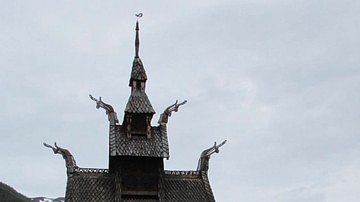
Dragonhead Decorations - Borgund Stave Church
The exterior decorations at Borgund Stave Church, Norway depicting dragon heads, c. 1180.

Image
Petroglyphs at The Begbyfelt
A collection of petroglyphs at The Begbyfelt in Østfold, Norway. The Petroglyphs are categorized as "Agricultural carvings”, and are believed to have been made between c. 1800 BCE and c. 400 CE.

Article
Trade in Medieval Europe
Trade and commerce in the medieval world developed to such an extent that even relatively small communities had access to weekly markets and, perhaps a day's travel away, larger but less frequent fairs, where the full range...

Article
Vikings TV Series - Historical Accuracy
Vikings (2013-present) is a historical fiction TV series created and written by English screenwriter Michael Hirst for the History Channel. Filmed in Ireland, the show draws on Scandinavian and European history...

Article
Viking Raids in Britain
The Viking raids and subsequent settlements define the period known as the Viking Age in Britain which had profound consequences on the development of the culture and language. The raids started in June of 793 CE when three...

Video
How the Norse Became Christian - Christianization of Scandinavia
In the new Kings and Generals historical animated documentary, we will describe the Christianization of Scandinavia and how the Norse abandoned their pantheon in Sweden, Denmark, Norway...
Image
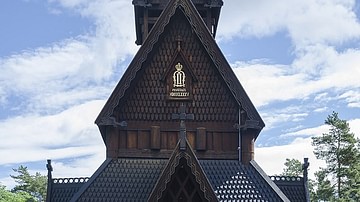
Gol Stave Church
Gol Stave Church dates from c. 1200. The church was bought in 1884 and moved to Oslo. It is standing today at The Norwegian Museum of Cultural History at Bygdøy.

Image
Runes in the Lom Stave Church
Runes left from the construction of Lom Stave Church. The church has been standing since the last half of the 12th century CE, and the runes spell out "I was here, all the way up in the corner”.
