
Search
Remove Ads
Advertisement
Search Results

Image
The Lion of Knidos
This colossal marble lion was found at a tomb within the ancient cemetery of Knidos (a coastal city in the south-west Turkey). The marble itself was brought from the Aegean Sea from mountain Pentelikon near the city of Athens...

Image
Assyrian Lion Hunt Relief
Frieze depicting a lion hunt, from the royal palace of Ashurbanipal, Nineveh, modern-day Iraq. Neo-Assyrian Empire, 668-631 BCE. The king's role was to protect his people from enemies. In ancient Assyria, this was symbolized...
Image
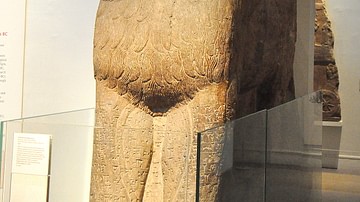
Colossal Guardian Lion from Nimrud
Colossal guardian lion found at the entrance to the temple of Ishtar, Sharrat-niphi. The cuneiform inscriptions on the statue mention the name of Ashurnasirpal II as the temple's builder. This lion was one of a...
Image
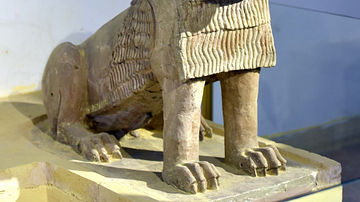
Terracotta Lion from Tell Harmal
This terracotta lion was found at the entrance to the Dagan Temple at Tell Harmal (ancient Shaduppum), in the eastern outskirt of Baghdad. The temple was dedicated to Nisaba (goddess of the grain and writing) and...
Image
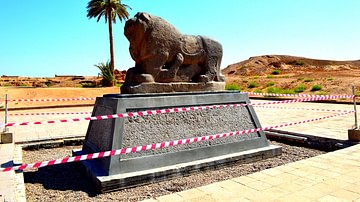
Lion of Babylon Statue, Babylonia
In June/July 2013 CE, an archaeological team started a mission to reconstruct the lion of Babylon statue and its surrounding. The platform of the statue has been reconstructed with cement. The lion itself was untouched...

Definition
Greek Archaic Period
The Greek Archaic Period (c. 800-479 BCE) started from what can only be termed uncertainty, and ended with the Persians being ejected from Greece for good after the battles of Plataea and Mykale in 479 BCE. The Archaic Period...

Image
Hero Overpowering a Lion
The Hero Overpowering a Lion, gypseous alabaster high relief with traces of paint from Khorsabad (Dur Sharrukin), facade N of the throne room of the palace of Sargon II, Assyria (Iraq). Neo-Assyrian Empire, reign of Sargon...

Image
Lion of Babylon, Ishtar Gate
Detail of a lion found along the processional way from Ishtar Gate into the city of Babylon. The Ishtar Gate was constructed around 575 BCE by King Nebuchadnezzar II of Babylon, made of fired bricks and decorated with...

Image
Babylonian Lion
A pacing, roaring lion, once part of King Nebuchadnezzar II’s throne room in his palace in the ancient city of Babylon. These roaring lions emphasized the power and might of the Babylonian king. Babylon, Mesopotamia, modern-day...

Image
Lion-Hunting Scene, King Ashurbanipal
Sculpted relief illustrating the sporting exploits of the last great Assyrian king, Ashurbanipal, North Palace, room C, panel 20-22, Nineveh, modern-day northern Iraq. Neo-Assyrian Empire, reign of King Ashurbanipal...
