
Search
Remove Ads
Advertisement
Search Results

Definition
Thales of Miletus
Thales of Miletus (l. c. 585 BCE) is regarded as the first Western philosopher and mathematician. He was born and lived in Miletus, a Greek colony in Ionia (modern Turkey) referenced as the birthplace of Greek Philosophy because...

Definition
Musonius Rufus
Gaius Musonius Rufus (c. 30 CE - c. 101 CE) was an influential 1st-century CE Stoic philosopher. While in modern times he is best known for being the teacher of Epictetus (c. 50 CE - c. 130 CE), Rufus was a highly respected figure...
Definition
Mo Ti
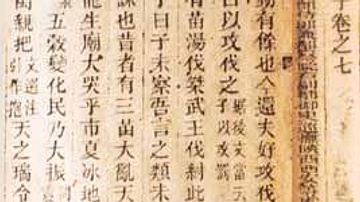
Mo Ti (l. 470-391 BCE, also known as Mot Tzu, Mozi, and Micius) was a Chinese philosopher of the Warring States Period (c. 481-221 BCE) associated with the Hundred Schools of Thought (different philosophical schools which established...

Article
Heraclitus: Life Is Flux
Heraclitus of Ephesus (l. c. 500 BCE) famously claimed that “life is flux” and, although he seems to have thought this observation would be clear to all, people have continued to resist change from his time to the present...

Definition
Pyrrho
Pyrrho of Elis (l. c. 360 to c. 270 BCE) was a Greek skeptic philosopher credited with founding the school of Pyrrhonism which taught that one must resist making judgments or stating conclusions because sense perception did not correlate...

Definition
Legalism
Legalism in ancient China was a philosophical belief that human beings are more inclined to do wrong than right because they are motivated entirely by self-interest and require strict laws to control their impulses. It was developed...

Definition
Lao-Tzu
Lao-Tzu (l. c. 500 BCE, also known as Laozi or Lao-Tze) was a Chinese philosopher credited with founding the philosophical system of Taoism. He is best known as the author of the Laozi (later retitled the Tao-Te-Ching translated as “The...

Image
Philosophy Presenting the Seven Liberal Arts to Boethius
Anicius Manlius Severinus Boethius (c. 475-525 CE) is depicted on the far left. An allegory of Philosophy presents to him the allegories of the Seven Liberal Arts dressed in 15th century clothing...

Definition
Archelaus (Philosopher)
Archelaus of Athens (l. c. 5th century BCE) was a Pre-Socratic philosopher in ancient Greece who claimed the first cause of existence was the opposition of cold and heat which caused the separation of the universal essence...

Definition
Gottfried Wilhelm Leibniz
Gottfried Wilhelm Leibniz (1646-1716) was a German polymath who became well-known across Europe for his work, particularly in the fields of science, mathematics, and philosophy. Leibniz's rationalist philosophy attempted...
