
Search
Remove Ads
Advertisement
Search Results
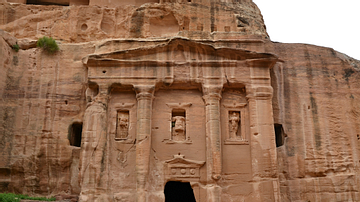
Image
Nabataean Rock-cut Tomb in Petra
The Tomb of the Soldier in Petra (Jordan), carved out of the red sand stone with niches containing male figures dressed in military style. The tomb was built in the Nabataean period around the second half of the 1st...
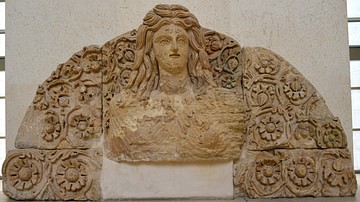
Image
Nabataean Relief Sculpture of Atargatis
Stone sculpture of Atargatis (Ataratheh), the Syrian goddess of fertility in Classical antiquity, from the entrance of a Nabataean temple in modern-day southern Jordan. The Kingdom of Nabatea became prosperous...

Image
Nabataean Lamp from Wadi Musa
This is a pottery lamp. Nabataean Period, 100 BCE to 500 CE. From modern-day Wadi Musa, Jordan Hashemite Kingdom. (The Jordan Museum, Amman, Jordan).

Article
Sacred Sites & Rituals in the Ancient Celtic Religion
In the religion of the ancient Celts who lived in Iron Age Europe from 700 BCE to 400 CE, certain natural sites like springs, river sources, and groves were held as sacred. These places, as well as...
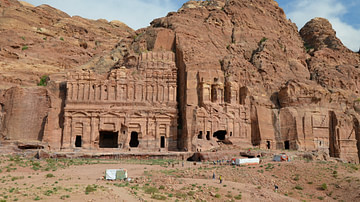
Image
Nabataean Tombs of Petra
View of the Royal Tombs at Petra (Jordan). From left to right: the Palace Tomb with three distinct stories; the Corinthian Tomb and the Silk Tomb. 1st century CE.
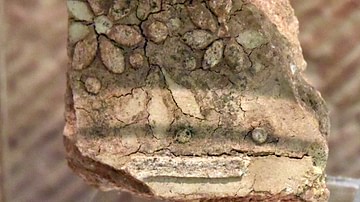
Image
Nabataean Stucco Wall Decoration
Part of a stucco wall decoration from Qasr al-Bint Temple at Raqmu-Petra, Kingdom of Nabataea, 1st century CE.
The Jordan Museum, Amman.

Image
Nabataean Eagle
The eagle is a popular icon in many cultures. In Jordan, eagles are associated with the Nabataean god Dushara, but were also meaningful to the Greeks, Romans, and Egyptians, who lived, travelled and lived here. Circa 100 CE. From...

Image
Nabataean Inscription from Petra
This sandstone block was a tombstone and was inscribed with Nabataean text, which records the death of a man "Sullay"who lived in Petra. It is not obvious when Sullay died, but the inscription says that he had an...

Article
Maya Religion: The Light That Came From Beside The Sea
The Mayan religious text, the Popol Vuh (known by many names, among them, The Light That Came From Beside The Sea) is the Quiche Maya story of creation translated into Spanish in the early 18th century...

Article
Religion & Superstition in Colonial America
Religion and superstition went hand in hand in Colonial America, and one’s belief in the first confirmed the validity of the second. The colonists' worldview was completely informed by religion and so everything...
