
Search
Remove Ads
Advertisement
Search Results

Video
The Flavian Dynasty of the Roman Empire
The Flavian Emperors were a dynasty of Roman emperors who ruled from 69 to 96 CE. They consisted of three emperors: Vespasian, Titus, and Domitian. - Vespasian (ruled 69-79 CE) was a skilled military commander...

Image
Map of the Rise and Fall of the Mexica (Aztec) Empire - Alliance, Expansion, and Tribute Power in Mesoamerica
The Mexica (commonly referred to as the Aztecs) emerged as a dominant power in central Mexico during the Late Postclassic period, culminating in the formation...
Definition
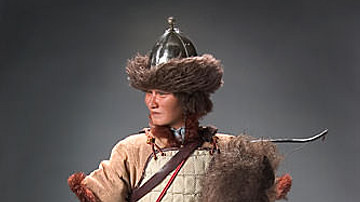
Attila the Hun
Attila the Hun (r. 434-453 CE) was the leader of the ancient nomadic people known as the Huns and ruler of the Hunnic Empire, which he established. His name means "Little Father" and, according to some historians, may not have...

Definition
Edward Gibbon
Edward Gibbon (1737-1794) was an English historian most famous for his influential work The History of the Decline and Fall of the Roman Empire, volume one of which was published in 1776, with the final sixth volume coming in 1788...

Definition
Ashurbanipal
Ashurbanipal (r. 668-627 BCE, also known as Assurbanipal) was the last of the great kings of Assyria. His name means "the god Ashur is creator of an heir" and he was the son of King Esarhaddon of the Neo-Assyrian Empire. In the Hebrew...

Definition
Second Anglo-Sikh War
The Second Anglo-Sikh War (1848-9) once again saw the British East India Company defeat the Sikh Empire in northern India. The war, which started off as a rebellion against British colonial rule, included the high-casualty...

Video
The Rise and Fall of the Inca Empire: A Short History
The Inca civilisation flourished in Peru and surrounding areas between 1400 and 1533 CE. Prior to the Inca being dominant in Western South America, the Chimu occupied the area until 1470 when the...

Definition
Golden Horde
The Golden Horde was the European appanage of the Mongol Empire (1206-1368 CE). Begun in earnest by Batu Khan in 1227 CE, the territory that would eventually become the Golden Horde came to encompass parts of Central Asia, much of...

Definition
Mansa Musa I - The Richest Man in History?
Mansa Musa I was the ruler of the Mali Empire in West Africa from 1312 to 1337. Controlling territories rich in gold and copper, and monopolising trade between the north and interior of the continent, Mali...

Image
Neo-Assyrian Empire c. 912-612 BCE
Map of the Neo-Assyrian Empire c. 912-612 BCE, showing expansion by Shalmeneser III (r. c. 859-824 BCE), Tiglath-Pileser III (r. c. 745-727 BCE), Sargon II (r. c. 722-705 BCE), Sennacherib (r. c. 705-681 BCE), and...
