
Search
Remove Ads
Advertisement
Search Results

Definition
Muromachi Period
The Muromachi Period (Muromachi Jidai, 1333-1573 CE) refers to the period of Japanese medieval history when the Ashikaga shogun capital was located in the Muromachi area of Heiankyo (Kyoto). Replacing the Kamakura Shogunate (1192-1333...

Definition
Mandate of Heaven
The Mandate of Heaven (Tianming), also known as Heaven's Mandate, was the divine source of authority and the right to rule of China's early kings and then emperors. The ancient god or divine force known as Heaven or Sky selected...
Definition
Ancient Chinese Architecture
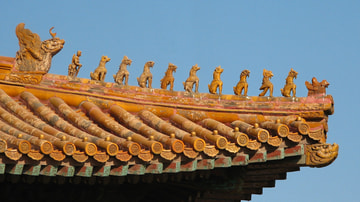
Walled compounds, raised pavilions, wooden columns and panelling, yellow glazed roof tiles, landscaped gardens, and a careful application of town planning and use of space are all notable features of the architecture...

Definition
King David
According to biblical tradition (and some say myth), David (c. 1035-970 BCE) was the second king in the ancient United Kingdom of Israel who helped establish the eternal throne of God. A former shepherd, David was renowned for his...

Definition
Ptolemaic Egypt
Ptolemaic Egypt existed between 323 and 30 BCE when Egypt was ruled by the Macedonian Ptolemaic dynasty. During the Ptolemaic period, Egyptian society changed as Greek immigrants introduced a new language, religious pantheon...

Definition
Mali Empire
The Mali Empire (1240-1645) of West Africa was founded by Sundiata Keita (r. 1230-1255) following his victory over the kingdom of Sosso (c. 1180-1235). Sundiata's centralised government, diplomacy and well-trained army permitted a...

Definition
Marcus Gavius Apicius
Marcus Gavius Apicius, a wealthy and educated member of the Roman elite who lived during the reign of Emperor Tiberius (14-37 CE), is famous for his love of food and a cookbook titled De Re Coquinaria (The Art of Cooking...

Definition
Empress Irene
Empress Irene was the wife of Leo IV and, on her husband's death, she reigned as regent for her son Constantine VI from 780 to 790 CE. From 797 to 802 CE she ruled as emperor in her own right, the first woman to do so in Byzantine...

Definition
Constans II
Constans II (aka Konstans II) was emperor of the Byzantine Empire from 641 to 668 CE. Sometimes known as Constans Pogonatos (“the Bearded”), he came to the throne by a series of unlikely events and his empire was immediately challenged...

Definition
Byzantine Architecture
The architecture of the Byzantine Empire (4th - 15th century CE) continued its early Roman traditions but architects also added new structures to their already formidable repertoire, notably improved fortification walls and...
