
Search
Remove Ads
Advertisement
Search Results
Article
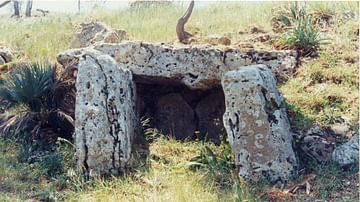
The Dolmens of Sicily
It is a well-known fact that Sicily, the largest island in the Mediterranean sea, went through a quite complex prehistoric period. So much so that it is difficult to navigate through the muddle of people that have followed...

Article
Warrior Women of the World of Ancient Macedon
The 8th November is celebrated as Archangels Day in Greece, but on that November day in 1977 CE something remarkable happened: an excavation team led by Professor Manolis Andronikos were roped down into...

Article
History & Mining Culture of the Ore Mountains
The Ore Mountains (Erzgebirge) on the border between Germany and the Czech Republic is a region rich in history and culture connected to the mining industry. For centuries the cities on both sides of the...

Article
The Nazca Lines: A Life's Work
The World Heritage-listed Nazca lines are a well-known part of the ancient heritage of Peru. One woman spent over 50 years studying and protecting them. Ana Maria Cogorno Mendoza shares the story of Dr Maria Reiche...

Interview
Interview with Greg Woolf
Join World History Encyclopedia as they talk to author and professor Greg Woolf all about his book Rome: An Empire's Story, Second Edition, published by Oxford University Press. Kelly (WHE): Do you want to just tell everyone...

Video
The Greek Myth of Pandora's Jar
Pandora and her jar or box a well-known figure from Greek myth, is known from the ancient literature as the first mortal woman who was crafted out of clay by the gods. The name Pandora can mean all- giving or the giver...

Image Gallery
A Gallery of Artifacts of Ancient Ireland
Humans arrived in the region now known as Ireland c. 7000-6500 BCE at modern-day Coleraine in the north, establishing communities and gradually moving southwards. Hunter-gatherers eventually adopted an agrarian...

Image
Map of the Shang Dynasty of China, c. 1100 BCE - Bronze, Kingship, and Networks in the Yellow River World
The Shang dynasty (c. 1600–1046 BCE) represents one of the earliest historically attested states in China, emerging in the Yellow River basin after the period...

Image
The First Industrial Revolution, c. 1760 - 1840
The First Industrial Revolution refers to the profound economic and technological transformation that reshaped parts of Europe and North America between c. 1760 and 1840, first and most intensively in...

Image
Map of the Urnfield Culture c. 1300 BCE
This map illustrates the spread of the Urnfield culture in Europe by around 1300 BCE, a late Bronze Age archaeological horizon named for the practice of cremating the dead and placing their ashes in urns buried...
