
Search
Remove Ads
Advertisement
Search Results
Image
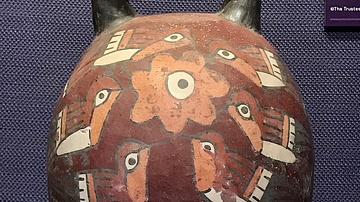
Aztec Hummingbird Whistling Pot
The Aztec civilization of ancient Mesoamerica believed that dead warriors were reincarnated as hummingbirds or butterflies. These whistling pots often included such birds, and they were considered spiritual conduits...
Image
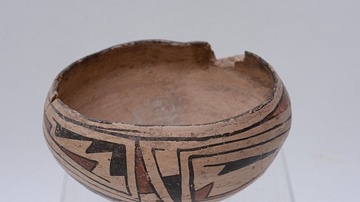
Pottery Bowl from Casas Grandes (Paquimé), Mexico
This pottery bowl comes from Casas Grandes (also known as "Paquimé"), which is located in what's present-day Chihuahua, Mexico. It is made from clay and dates to c. 1250-1400 CE. Casas Grandes was one...

Article
The Mayan Pantheon: The Many Gods of the Maya
The pantheon of the Maya is a vast collection of deities worshipped throughout the regions of Yucatan, Quintana Roo, Campeche, Tabasco, and Chiapas in Mexico and southward through Guatemala, Belize, El...

Article
The Maya Calendar and the End of the World: Why the one does not substantiate the other
The Popol Vuh recounts the story of twins who journeyed to Xibalba. For the Maya, their round of adventures serves as a metaphor for timeless, repeating cycles and for the...

Article
The Tizoc Stone
The Tizoc Stone is a huge stone cylinder from the Aztec capital of Tenochtitlan which depicts a sun-disk on its flat upper surface and carries a frieze around its outer edge showing Aztec warriors and the Aztec king Tizoc, whose...

Article
Maya Food & Agriculture
For the Maya, reliable food production was so important to their well-being that they closely linked the agricultural cycle to astronomy and religion. Important rituals and ceremonies were held in honour of specialised workers...
Article
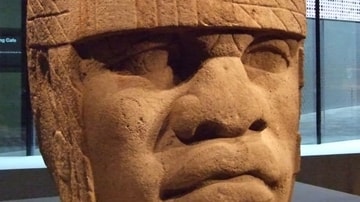
Olmec Colossal Stone Heads
The stone head sculptures of the Olmec civilization of the Gulf Coast of Mexico (1200 BCE - 400 BCE) are amongst the most mysterious and debated artefacts from the ancient world. The most agreed upon theory is that, because...

Article
Maya Religion: The Light That Came From Beside The Sea
The Mayan religious text, the Popol Vuh (known by many names, among them, The Light That Came From Beside The Sea) is the Quiche Maya story of creation translated into Spanish in the early 18th century...

Image
Twelve Spices That Changed the World - Trade, Empire, and the Global Age of Spices, 1450–1650
Between c. 1450 and 1650, demand for spices and other high-value plant commodities became an important catalyst for European maritime expansion. Pepper, cinnamon, cloves...

Video
History of the Aztec Civilization, a Mesoamerican Empire
The Aztec civilisation spanned from around 1300 CE until 1521, and at its greatest extent, the empire covered most of Northern Mesoamerica. Although we refer to these peoples as ‘Aztecs,’ that is...
