
Search
Remove Ads
Advertisement
Search Results
Definition
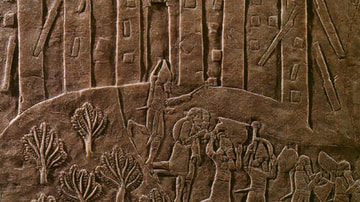
Susa
Susa was one of the oldest cities in the world and part of the site is still inhabited as Shush, Khuzestan Province, Iran. Excavations have uncovered evidence of continual habitation dating back to 4395 BCE but that early community grew...

Definition
Sargon of Akkad - From Gardener to King of the Four Corners of the World
Sargon of Akkad (reign 2334-2279 BCE) was the king of the Akkadian Empire of Mesopotamia, the first multinational empire in history, who united the disparate kingdoms of the region under...
Definition
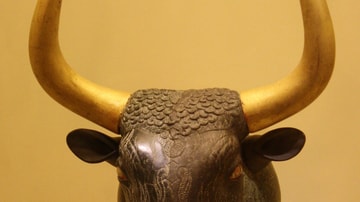
Ancient Crete
Crete is an island in the eastern Mediterranean which during the Bronze Age produced the influential Minoan civilization with its distinctive architecture and art. An important member of the Greek world in the Archaic period, Crete...

Definition
Imhotep
Imhotep (Greek name, Imouthes, c. 2667-2600 BCE) was an Egyptian polymath (a person expert in many areas of learning) best known as the architect of King Djoser's Step Pyramid at Saqqara. His name means "He Who Comes in Peace" and he...

Definition
Zhou Dynasty
The Zhou Dynasty (1046-256 BCE) was among the most culturally significant of the early Chinese dynasties and the longest lasting of any in China's history, divided into two periods: Western Zhou (1046-771 BCE) and Eastern Zhou (771-256...

Definition
Hurrians
The Hurrians (aka Hurri or Khurri) were a Bronze Age people who flourished across the Near East from the 4th millennium BCE to the 1st millennium BCE. Hurrian is also the name of the language these people spoke and, indeed, is the one...

Definition
Brahmanism
Brahmanism (also known as Vedic Religion) is the belief system that developed from the Vedas during the Late Vedic Period (c. 1100-500 BCE) originating in the Indus Valley Civilization after the Indo-Aryan Migration c. 2000-1500 BCE...
Definition
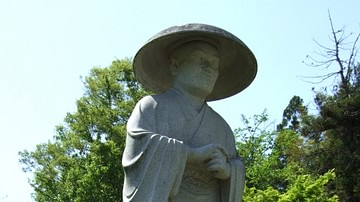
Ennin
Ennin (c. 793-864 CE, posthumous title: Jikaku Daishi) was a Japanese Buddhist monk of the Tendai sect who studied Buddhism at length in China and brought back knowledge of esoteric rituals, sutras, and relics. On his return, he published...
Definition
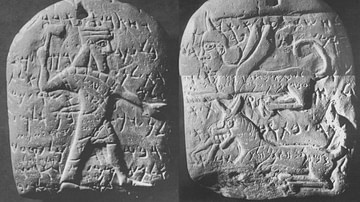
Arslan Tash Amulet
Dated to the 7th century BCE, the Arslan Tash amulet (AT1) was discovered in Arslan Tash, Syria and contains the writing of Phoenician, magic incantations. The limestone plaque includes a variety of features: incantations perceived...
Definition
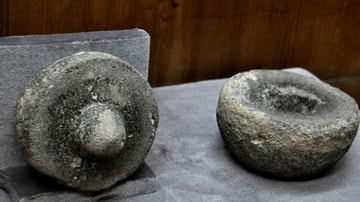
Mesopotamian Science and Technology - Scientific Method in the Ancient Near East
Mesopotamian science and technology developed during the Uruk period (circa 4000-3100 BCE) and the Early Dynastic period (circa 2900-2350/2334 BCE) of the Sumerian culture of...
