
Search
Remove Ads
Advertisement
Search Results
Article
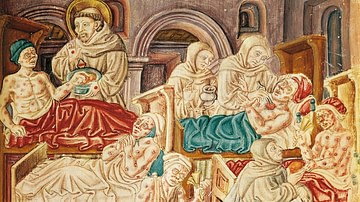
Reactions to Plague in the Ancient & Medieval World
Throughout history, epidemics and pandemics of plague and other diseases have caused widespread panic and social disorder even, in some instances, when the people of one region were aware of a pervasive...
Article
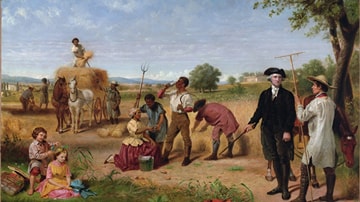
Daily Life in Colonial America
Life in Colonial America was difficult and often short but the colonists made the best of their situation in the hopes of a better life for themselves and their families. The early English colonists, used to purchasing...

Article
The After-Life In Ancient Greece
In ancient Greece the continued existence of the dead depended on their constant remembrance by the living. It was understood that the soul lived on after bodily death in the realm known as Hades; but that land had...

Article
Plague in the Ancient & Medieval World
The word 'plague', in defining a lethal epidemic, was coined by the physician Galen (l. 130-210 CE) who lived through the Antonine Plague (165 - c. 180/190 CE) but the disease was recorded long before in relating...
Article
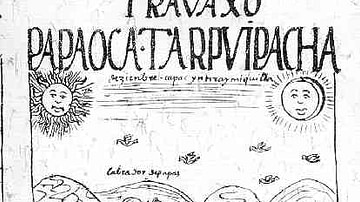
Daily Life in the Inca Empire
Daily life in the Inca empire was characterised by strong family relationships, agricultural labour, sometimes enforced state or military service for males, and occasional lighter moments of festivities to celebrate...

Interview
Interview: Kutuzov a Life in War and Peace by Alexander Mikaberidze
Join World History Encyclopedia as they have a chat with author Alexander Mikaberidze all about his new book Kutuzov: A Life in War and Peace, published by Oxford University Press. Kelly...

Article
Roman Daily Life
From the early days of the Roman Republic through the volatile reigns of such ignoble emperors as Caligula, Nero, and Commodus, the Roman Empire continued to expand, stretching its borders to encompass the entire Mediterranean...
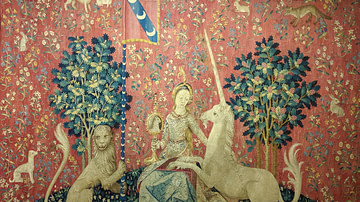
Image Gallery
The Lady and the Unicorn: Medieval Tapestries
The Lady and the Unicorn tapestries, housed at the Musée de Cluny in Paris, are a series of six exquisite medieval tapestries that are renowned for their beauty, craftsmanship, and mysterious symbolism...

Article
The Life of Antisthenes of Athens in Diogenes Laertius
Antisthenes (c. 445-365 BCE) was a Greek philosopher who founded the Cynic School of Athens. He was a follower of Socrates and appears in Plato's Phaedo as one of those present at Socrates' death...

Article
The Life of Hercules in Myth & Legend
Hercules is the Roman name for the Greek hero Herakles, the most popular figure from ancient Greek mythology. Hercules was the son of Zeus, king of the gods, and the mortal woman Alcmene. Zeus, who was always...
