
Search
Remove Ads
Advertisement
Search Results

Article
Wine Culture in the Hellenistic Mediterranean
The culture of drinking wine was enjoyed throughout the Mediterranean world, and what is true now was true in antiquity, too: wine is always good business. The Hellenistic Period (c. 335-30 BCE), between...

Definition
K'inich Janaab' Pakal
K'inich Janaab' Pakal (23 March 603 CE - 31 March 683 CE) was the Maya king of Palenque in the modern-day State of Chiapas, Mexico. Also known as Pacal (which means 'shield') and Pacal the Great, he is most famous for raising...

Image
Sacred Maya Cenote at San Gervasio
This sacred Maya cenote or ceremonial sinkhole is located at the ruins of San Gervasio, which is located on the island of Cozumel in Mexico.

Definition
Copan
Copán (in modern Honduras) is located on the floodplain of the river of the same name. It was the most southerly of the Classic Maya centres and, at an altitude of 600 metres, the highest. Copán reached the height of its power in the...

Image
The Maya "Palace" Structure at San Gervasio
Colonnaded halls were very popular among the Maya along Mexico's eastern coast in Pre-Columbian times. At San Gervasio, located on the Mexican island of Cozumel, one can see this Maya "palace" structure in...

Image
Maya Ruins of San Gervasio on Cozumel
This photograph shows some Maya ruins from the San Gervasio archaeological site, which is located on the island of Cozumel in Mexico. In the center, one sees the "Niches" structure, which was once composed of...

Video
History of the Etruscan Culture: the First Great Italian Civilization
The Etruscans, who knew themselves as the Rasenna, were a culture that flourished in central Italy in the region of Etruria between the 8th and the 3rd century BCE. They are first mentioned...

Definition
Serpent Mound
Serpent Mound (also known as Great Serpent Mound) is an archaeological and historic site in Peebles, Ohio, USA, enclosing an effigy mound 1348 feet (411 m) long in the shape of a serpent, the largest effigy mound of a serpent in...

Image
The Maya "Alamo" Structure at San Gervasio
This temple was originally roofed although part of its vaulting, shaped like an inverted staircase, can still be seen on its southern side. There was once an altar within, where offerings were placed in Pre-Columbian...
Image
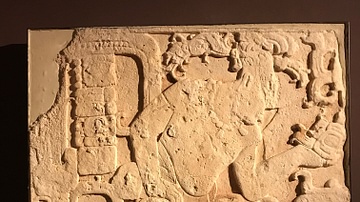
Maya Noble Relief from Tabasco
This Maya relief depicting a nobleman is made from chalkstone, and it comes from what is present-day Tabasco, Mexico. It dates from the Late Classic Period around the year 780 CE. (Museum Rietberg, Zürich).
