
Search
Remove Ads
Advertisement
Search Results

Definition
Loki
Loki is a god in Norse mythology who is often simply described as the 'trickster' god for his love of playing pranks on both his fellow gods and his or their opponents. Sworn brother of Odin and often the one to dig the other gods out...

Definition
Basil II
Basil II (aka Basilius II) was the emperor of the Byzantine Empire from 976 to 1025 CE. He became known as the Bulgar-Slayer (Bulgaroktonos) for his exploits in conquering ancient Bulgaria, sweet revenge for his infamous defeat at Trajan's...
Definition
Romanos I
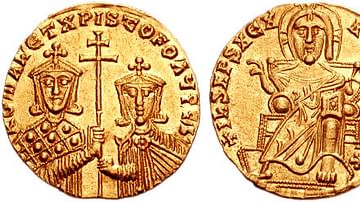
Romanos I Lekapenos (“the Ignorant”) was emperor of the Byzantine Empire from 920 to 944 CE. Of Armenian descent, he was a military commander who usurped the throne to rule as co-emperor with the rightful heir, but still minor, Constantine...

Definition
Leo VI
Leo VI was emperor of the Byzantine empire from 886-912 CE. He was the second emperor of the Macedonian dynasty and is sometimes known as “Leo the Wise” in reference to his prolific literary output which ranged from orations to law codes...

Definition
Michael Psellos
Michael Psellos (1018 - c. 1082 CE) was a Byzantine historian, writer, and intellectual. Michael acted as courtier and advisor to several Byzantine emperors, and he was the tutor of Michael VII. Writing between 1042 and 1078 CE...

Definition
Works and Days
Works and Days is an epic poem written in dactylic hexameter, credited to the 8th-century BCE Greek poet Hesiod. Hesiod is generally remembered for two epic works, Theogony and Works and Days but, like his contemporary Homer, he...

Definition
Book of Kells
The Book of Kells (c. 800) is an illuminated manuscript of the four gospels of the Christian New Testament, currently housed at Trinity College, Dublin, Ireland. The work is the most famous of the medieval illuminated manuscripts...

Definition
Romanos IV Diogenes
Romanos IV Diogenes ruled the Byzantine Empire from 1068 to 1071 CE. He was a military emperor, and his policies and campaigns served to shore up Byzantine defenses against the Seljuk Turks. However, in the aftermath of the...

Definition
Freyja
Freyja (Old Norse for 'Lady', 'Woman', or 'Mistress') is the best-known and most important goddess in Norse mythology. Beautiful and many-functioned, she features heavily as a fertility goddess stemming from her place in the Vanir family...

Definition
Kingdom of Nabatea
The Nabatean Kingdom was a powerful political entity which flourished in the region of modern-day Jordan between the 4th century BCE and c. 106 CE and is best known today for the ruins of its capital city of Petra. Although...
