
Search
Did you mean: Lyre?
Remove Ads
Advertisement
Search Results

Image
Circus Mosaic from Lugdunum
The restored Circus Mosaic from Lugdunum (modern Lyon, France), 2nd century CE. It vividly depicts a chariot race with eight chariots competing, two from each faction. The four teams, known by the colours worn by the...
Image
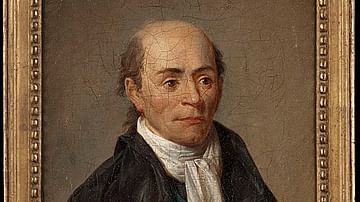
Joseph Chalier
Portrait of Joseph Chalier, the Jacobin leader whose execution in Lyon, France led to the Revolt of Lyon during the Federalist Revolts (May-December 1793). Painting attributed to Jean-François Garneray, c. 1793. In the Musée Carnavalet...

Article
The Separation of Christianity from Judaism
In the mid-2nd century CE, Christianity began a gradual process of identity-formation that would lead to the creation of a separate, independent religion from Judaism. Initially, Christians were one of many...

Article
Fall of Maximilien Robespierre
The fall of Maximilien Robespierre, or the Coup of 9 Thermidor, was a series of events that resulted in the arrests and executions of Robespierre and his allies on 27-28 July 1794. It signaled the end of the Reign...

Article
The Ancient Celtic Pantheon
The ancient Celtic pantheon consisted of over 400 gods and goddesses who represented everything from rivers to warfare. With perhaps the exception of Lugh, the Celtic gods were not universally worshipped across Iron Age...

Article
Battle of Waterloo
The Battle of Waterloo (18 June 1815) was the last major engagement of the Napoleonic Wars (1803-1815), fought by a French army under Emperor Napoleon I (r. 1804-1814; 1815) against two armies of the Seventh Coalition. Waterloo...
Article
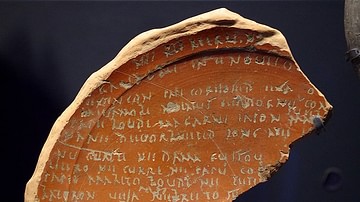
A Linguistical Analysis of Ancient Celtic Languages
The Celtic languages form a branch of the Indo-European (IE) language family. They derive from Proto-Celtic and are divided into Continental Celtic languages (Lepontic, Gaulish, Galatian, Noric, Celtiberian...
Article
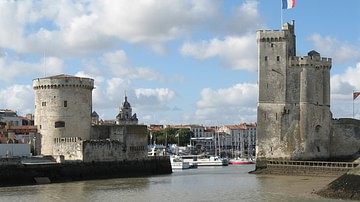
La Rochelle, a Protestant Stronghold of the French Reformation
La Rochelle emerged early in the French Reformation as a Protestant political and military center. The city's fortifications withstood repeated sieges over the years. In 1627, La Rochelle was...
Article
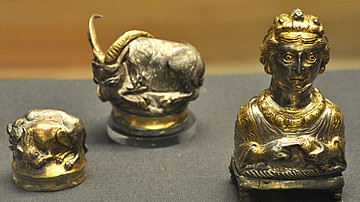
The Roman Hoxne Hoard
The Hoxne Hoard is the largest cache of late Roman gold found anywhere in the Roman Empire. Discovered by a metal detectorist in Suffolk, in the east of England in 1992 CE, the incredible collection contains 14,865 late-4th...

Article
Hadrian's Travels
No other Roman emperor travelled as much as Hadrian (r. 117-138 CE). The 'restless' emperor spent more time travelling than in Rome, devoting half of his 21-year reign to the inspection of the provinces. His travels provided...
