
Search
Remove Ads
Advertisement
Search Results

Article
Assassination of Archduke Franz Ferdinand - The Road to WWI
The assassination of Archduke Franz Ferdinand (1863-1914) in the Balkans in the summer of 1914 set off a chain of events that led to the First World War (1914-18). For over a decade before, imperialistic...

Article
Arsenale - The Shipyard and Arsenal of Venice
The immense commercial trade, wealth, and sea power of the Republic of Venice was rooted in the ships built in the industrial site known as the Arsenale, or arsenal. It was first established in 1104 and...

Article
Global Trade in the 13th Century
In the 13th century, astonishing quantities of spices and silk passed from the Far East to Europe. Exact amounts are not known, but spice popularity in both cuisine and medicine reached its historical peak during...

Article
The Causes of WWI
The origins of the First World War (1914-18) are many and varied, with some even dating back several decades, but a political assassination in the Balkans in the summer of 1914 was the spark that blew up Europe's political powder...

Collection
Government & Society in Ancient Greece
In this collection, we examine one of the greatest contributions made by the ancient Greeks to world culture: their systems of government and, above all, the ideas of democracy and mass participation in politics...
Definition
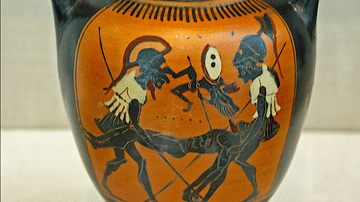
Thanatos
Thanatos is the personification of Death in Greek mythology. He is the son of Nyx (Night) and the twin brother of Hypnos (Sleep). Some sources also name Erebus (Darkness) as his father. As the personification of Death, Thanatos works...
Definition
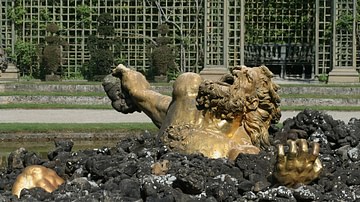
Giants
In Greek mythology, the Giants (Gigantes) are an aggressive race of creatures who were born from Gaia (the Earth) after drops of Uranus' blood fell on the Earth after he was castrated. The Giants had great strength and were fearsome to...

Definition
Nymph
A nymph (Greek: νύμφη, nymphē) in Greek and in Roman mythology is a young female deity typically identified with natural features such as mountains (oreads), trees and flowers (dryads and meliae), springs, rivers, and lakes (naiads) or...
Definition
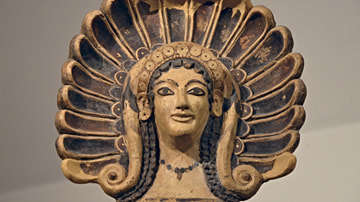
Etruscan Pottery
Etruscan pottery, produced over five centuries, was nothing if not varied. Indigenous wares such as the glossy black bucchero were made alongside red- and black-figure pottery imitating, yet modifying those produced in the Greek...
Definition
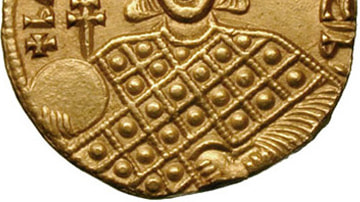
Basil I
Basil I was emperor of the Byzantine Empire from 867 to 886 CE and he founded the "Macedonian" dynasty which lasted for over 200 years. Basil was an Armenian from a humble background who had risen to become the second most powerful man...
