
Search
Remove Ads
Advertisement
Search Results

Definition
Byzantine Art
Byzantine art (4th - 15th century CE) is generally characterised by a move away from the naturalism of the Classical tradition towards the more abstract and universal, there is a definite preference for two-dimensional representations...

Article
Early Muslim Conquests (622-656 CE)
Islam arose as a religious and socio-political force in Arabia in the 7th century CE (610 CE onwards). The Islamic Prophet Muhammad (l. 570-632 CE), despite facing resistance and persecution, amassed a huge following...

Definition
Kharosthi Script
The Kharosthi script (also known as 'Indo-Bactrian' script) was a writing system originally developed in present-day northern Pakistan, sometime between the 4th and 3rd century BCE. Kharosthi was employed to represent a form of...

Definition
Caracalla
Caracalla was Roman emperor from 211 to 217 CE. Born Lucius Septimius Bassianus, son of Septimius Severus and Julia Domna, he became co-ruler with his father in 198 CE and sole ruler after the death of his father in 211 CE and of his...

Definition
Pergamon
Pergamon (also Pergamum) was a major intellectual and cultural center in Mysia (northwest Asia Minor, modern-day Turkey) which flourished under the Attalid Dynasty (281-133 BCE) during the Hellenistic Period. It was the capital of the...

Definition
Cusco
Cuzco (also Cusco or Qosqo) was the religious and administrative capital of the Inca Empire which flourished in ancient Peru between c. 1400 and 1534 CE. The Incas controlled territory from Quito to Santiago, making theirs the largest...

Definition
Nineveh - The Great Cultural Center That Became the "City of Sin"
Nineveh (modern-day Mosul, Iraq) was one of the oldest and greatest cities in antiquity. It was originally known as Ninua, a trade center, and would become one of the largest and most affluent...

Definition
Avesta
The Avesta is the scripture of Zoroastrianism which developed from an oral tradition founded by the prophet Zoroaster (Zarathustra, Zartosht) sometime between c. 1500-1000 BCE. The title is generally accepted as meaning “praise”, though...
Definition
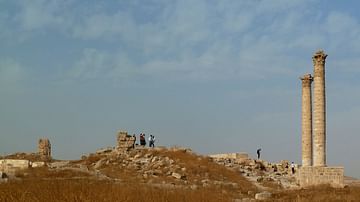
Edessa
Edessa (modern Urfa), located today in south-east Turkey but once part of upper Mesopotamia on the frontier of the Syrian desert, was an important city throughout antiquity and the Middle Ages. A city within the Seleucid Empire, then...
Definition
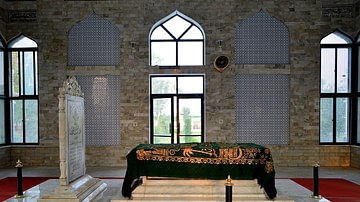
Muhammad Ghori
Shihab al-Din (also Muʿizz al-Din Muhammad ibn Sam), popularly known as Muhammad Ghori (r. 1173-1206 CE), was the Muslim ruler who laid the foundation for the subsequent Islamic ruling dynasties of India which saw its pinnacle...
