
Search
Did you mean: Kingdom of Mercia?
Remove Ads
Advertisement
Search Results

Definition
Ancient Egyptian Government
The government of ancient Egypt was a theocratic monarchy as the king ruled by a mandate from the gods, initially was seen as an intermediary between human beings and the divine, and was supposed to represent the gods'...

Image
Kartli/Iberia Coin of Prince Stephanos I
Kartli/Iberia coin of Prince Stephanos I, first emission. Silver. Weight – 2,9 gr. d=28mm. Obverse: Ohrmazd IV to the right. Legend in Pehlevi: hrm – aphzu (Ohrmazd Augustus). This is placed within onefold...

Image
Verrco Sculpture from Ancient Iberia
This verraco of a pig is made of granite and dates from the 3rd-1st century BCE. It was created by members of the Vettonian culture of ancient Iberia and was found in the Spanish province of Ávila. Verracos were...

Definition
First Intermediate Period of Egypt - Era of Transformation
The First Intermediate Period of Egypt (2181-2040 BCE) is the era that followed the Old Kingdom (circa 2613-2181 BCE) and preceded the Middle Kingdom (2040-1782 BCE) periods of Egyptian history...

Image
Map of the Taifa Kingdoms of Iberia, 1031–1086 - Al-Andalus between Córdoba and the Almoravids
The first taifa period followed the collapse of Umayyad authority in al-Andalus. The Umayyad Emirate of Córdoba (756–929) had become the Caliphate of Córdoba (929–1031...

Image
Warrior Stela from Bronze Age Iberia
This stela is from Solana de Cabañas (Cabañas del Castillo, Cáceres), Spain and dates from the Late Bronze Age. It is made of slate, and it was unearthed in the late 19th century CE. This was the first specimen...

Image
Stela of Hernán Pérez VI from Bronze Age Iberia
This granite stela dates from the Early or Middle Bronze Age. It was discovered in Cáceres, Spain. (Museo Arqueológico Nacional, Madrid)

Image
Kartli/Iberia. Prince Juansher’s Drachm
Silver. Weight – 2,73 gr. d=24/25 mm. Obverse: Ohrmazd IV to the right. Legend in Pehlevi: hrm – aphzu (Ohrmazd Augustus). This is placed within onefold circle of the dots. Above two Asomtavruli letters...
Image
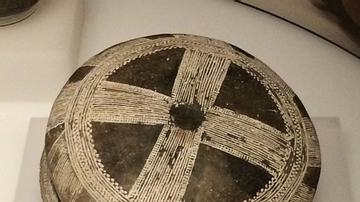
Early Bronze Age Bell Beakers from Iberia
These clay bell beakers come from the Early Bronze Age necropolis of Ciempozuelos (Cuesta de la Reina, Madrid), Spain and they were found during excavations conducted in the late 19th century CE. (Ciempozuelos...
Image
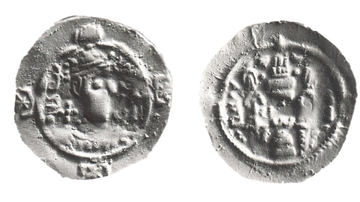
Kartli/Iberia Coin of Ohrmazd IV
Silver. The weights range from 2,92 gr. to 3,83 gr. d=30-31/34 mm. Obverse: Ohrmazd IV to the right. Legend in Pehlevi: hrm – aphzu (Ohrmazd Augustus), in front of the figure. Cross behind the figure. This is...
