
Search
Remove Ads
Advertisement
Search Results
Definition
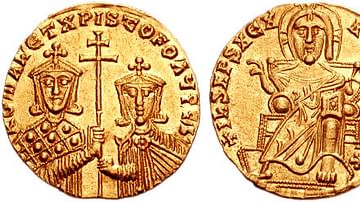
Romanos I
Romanos I Lekapenos (“the Ignorant”) was emperor of the Byzantine Empire from 920 to 944 CE. Of Armenian descent, he was a military commander who usurped the throne to rule as co-emperor with the rightful heir, but still minor, Constantine...

Definition
English Reformation
The English Reformation began with Henry VIII of England (r. 1509-1547 CE) and continued in stages over the rest of the 16th century CE. The process witnessed the break away from the Catholic Church headed by the Pope in Rome...

Definition
Protestant Reformation
The Protestant Reformation (1517-1648) refers to the widespread religious, cultural, and social upheaval of 16th-century Europe that broke the hold of the medieval Church, allowing for the development of personal interpretations...

Definition
Heinrich Bullinger
Heinrich Bullinger (l. 1504-1575) was a Swiss reformer, minister, and historian who succeeded Huldrych Zwingli (l. 1484-1531) as leader of the Reformed Church in Switzerland and became the theological bridge between Zwingli's...
Definition
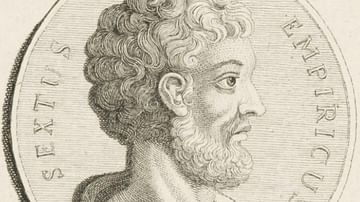
Sextus Empiricus
Sextus Empiricus (l. c. 160 to c. 210 CE) was a Greek Skeptic who developed the ideas of the earlier Greek Skeptic philosopher Pyrrho of Elis (l. c. 360 to c. 270 BCE) who claimed that tranquility of mind was attainable by suspending...

Definition
Electrical Telegraph
The electrical telegraph was invented in 1837 by William Fothergill Cook (1806-1879) and Charles Wheatstone (1802-1875) in England with parallel innovations being made by Samuel Morse (1791-1872) in the United States. The...

Definition
Sugar Act
The Sugar Act of 1764, also known as the American Revenue Act, was legislation passed by the Parliament of Great Britain on 5 April 1764 to crack down on molasses smuggling in the American colonies and to raise revenue to pay for the...
Definition
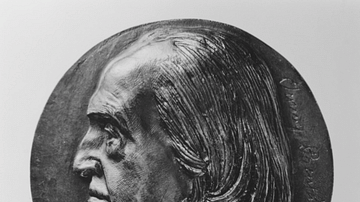
Jeremy Bentham
Jeremy Bentham (1748-1832) was an English philosopher and liberal social reformer best known as the founder of utilitarianism based on the greatest happiness principle, that is, rationally judging the success of a law by considering...

Article
The Monastic Movement: Origins & Purposes
In 313 CE, Constantine the Great (272 – 337 CE) ended the sporadic-yet-terrifying Christian persecutions under the Roman Empire with his “Edict of Milan,” and brought the Christian church under imperial protection...

Article
Scripture, Faith, the Sacraments, and the Holy Spirit in Calvin’s Institutes
The Protestant Reformation was a period of religious history marked by a great defining, debating, and divergence on what it meant to be an orthodox, faithful Christian. To this...
