
Search
Remove Ads
Advertisement
Search Results
Image
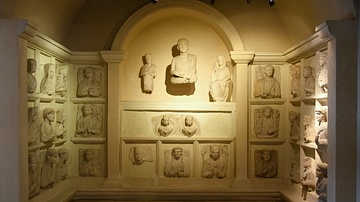
Subterranean Tomb from Palmyra
The hypogea or underground tombs, along with the tower tombs and house tombs, constitute an important part of the monumental burials of the wealthy Palmyrene class in the first and second centuries CE. The underground galleries were, most...
Image
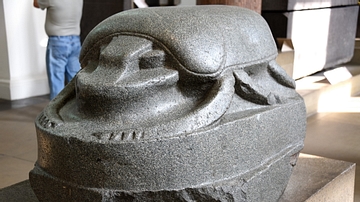
Colossal Scarab
This is one of the largest representations of scarab beetles to survive. It also ranks among the last great statues of any pharaonic deity. The scarab represented Khepri, the form assumed by the sun-god at dawn. The Egyptians noticed that...
Image
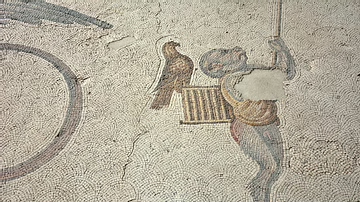
A Monkey Bird-Catcher, Byzantine Mosaic
The Monkey as a Bird-Catcher: The monkey under a date tree is holding a long stick in his hands and trying to catch birds. He has a wooden cage on his back with a bird on it. Monkeys are known to have been used in some chores. Period: Early...
Image
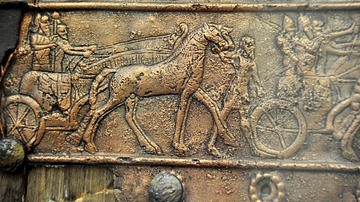
Royal Chariot from Balawat Gate
Detail of the bronze casing of the Balawat gate. From Balawat (Imgur-Enlil), northern Mesopotamia, Iraq. Neo-Assyrian Period, reign of King Shalmaneser III, 858-824 BCE. (Ancient Orient Museum/Istanbul Archaeological Museums, Istanbul, Turkey...
Image
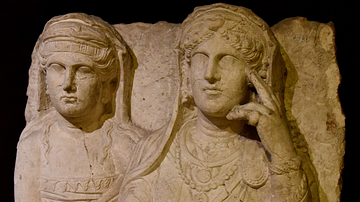
Funerary Relief from Palmyra of a Woman and Daughter
This relief depicts an older woman with her daughter. They are set in a line, represented frontally, stiff, and lifeless. Both of them wear turbans and headbands. At their temples, long strands of hair are combed back and tucked into the...
Image
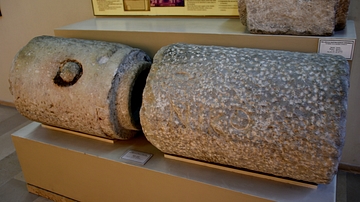
Inscribed Water Conduit from Beyazit
This is an inscribed water conduit with a bung. Marble. From Beyazit, modern-day Istanbul, Turkey. Fourth century CE. (Museum of Archaeology, Istanbul, Turkey).
Image
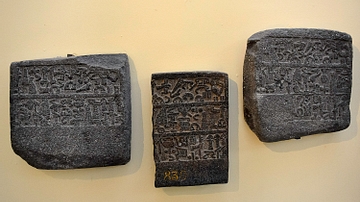
Wall slabs of king Urhilina
The hieroglyphic inscriptions on these basalt wall slabs mention the activities of king Urhilina and his son. From modern-day Hama, Syria. Late Hittite period, 9th century BCE. (Istanbul Archeological Museums/Ancient Orient Museum, Istanbul...

Image
Icon Portraying an Apostle
This marble icon depicts an unidentified image of an apostle. 6th century CE. From the Saraçhane excavations, Istanbul, in modern-day Turkey. (Museum of Archaeology, Istanbul, Turley).
Image
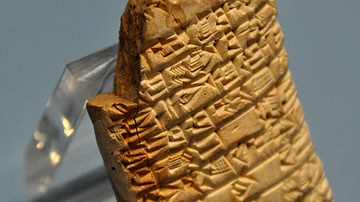
Court Decision Tablet
This terracotta cuneiform tablet narrates a verdict about a murder. From Girsu (modern-day Tell Telloh, Dhi-Qar Governorate, Iraq), Southern Mesopotamia, Iraq. Neo-Sumerian period (Ur III), 2112-2004 BCE. (Istanbul Archaeological Museums/Ancient...

Image
A Wall Relief from Tiglath-Pileser III's Palace
A man holds a mace and a bow and a number of cows appear behind him. The name of the man is unknown. A fragment of a limestone wall relief from the palace of Tiglath-pileser III at Nimrud (ancient Kalhu; Biblical Calah). Neo-Assyrian era...
