
Search
Remove Ads
Advertisement
Search Results

Definition
Xerxes I
Xerxes I (l. 519-465, r. 486-465 BCE), also known as Xerxes the Great, was the king of the Persian Achaemenid Empire. His official title was Shahanshah which, though usually translated as `emperor', actually means `king of kings'. He...

Definition
Masada
Masada (“fortress” in Hebrew) is a mountain complex in Israel in the Judean desert that overlooks the Dead Sea. It is famous for the last stand of the Zealots (and Sicarii) in the Jewish Revolt against Rome (66-73 CE). Masada is a UNESCO...
Definition
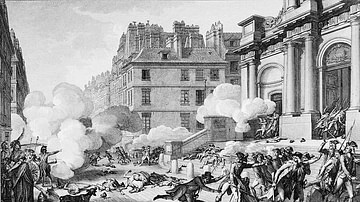
13 Vendémiaire
The Revolt of 13 Vendémiaire Year IV (5 October 1795) was a royalist uprising in Paris during the French Revolution (1789-1799). In response to the anti-royalist policies of the Thermidorian Reaction, 25,000 Parisians rose in revolt...

Image
Map of Settlement & Mobility in the Aegean, c. 1100-550 BCE - Migration, Memory, and the Making of the Hellenic World
The collapse of the Mycenaean palatial system (c. 1200–1100 BCE) initiated a prolonged period of demographic, political, and cultural reorganization...

Definition
Boudicca
Boudicca (d. 61 CE) was the Celtic queen of the Iceni tribe of modern-day East Anglia, Britain, who led a revolt against Rome in 60/61 CE. The Iceni king, Prasutagus, an independent ally of Rome, divided his estate between his daughters...

Definition
Nat Turner's Rebellion
Nat Turner's Rebellion (also known as the Southampton Insurrection) was a slave revolt in Southampton County, Virginia, between 21 and 23 August 1831. Led by Nat Turner (l. 1800-1831), an educated slave, the insurrectionists...
Definition
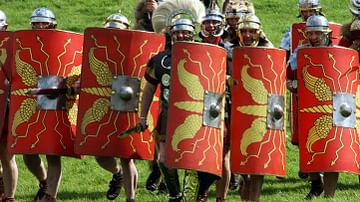
Legio I Germanica
Legio I Germanica was a Roman legion that won acclaim early under Augustus (27 BCE - 14 CE) but was stripped of its title for cowardice. Stationed on the Lower Rhine, the legion mutinied in 14 CE and then faced disgrace when...
Article
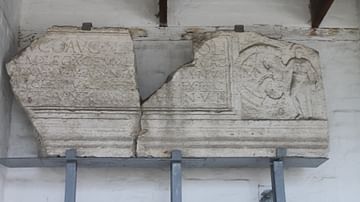
Legions of Syria
The Roman legions of Syria served as a buffer, protecting the Roman Empire not only externally from such threats as Parthia and the Sasanian Empire but also internally during the Great Jewish Revolt of 66 CE and the Bar-Kochba...

Definition
Martyr
A martyr is someone who voluntarily dies for either a religious or secular cause. The word originates from "witness" in Greek and is related to a witness in court testifying to one's beliefs or truth, despite the risk involved. As such...

Article
The Year of the Four Emperors & the Demise of Four Roman Legions
During the Year of the Four Emperors (69 CE), the fight between Vitellius and Vespasian would ultimately bring about the demise of four legions, the XV Primigenia, I Germanica, IIII Macedonica...
