
Search
Remove Ads
Advertisement
Search Results

Image
Neo-Assyrian Empire c. 912-612 BCE
Map of the Neo-Assyrian Empire c. 912-612 BCE, showing expansion by Shalmeneser III (r. c. 859-824 BCE), Tiglath-Pileser III (r. c. 745-727 BCE), Sargon II (r. c. 722-705 BCE), Sennacherib (r. c. 705-681 BCE), and...

Video
Marcus Aurelius: The Philosopher & Emperor of the Roman Empire
Marcus Aurelius (r. 161 to 180 CE) was a Roman emperor best known as the last of the Five Good Emperors of Rome (following Nerva, Trajan, Hadrian, and Antoninus Pius) and as the author of the...

Image
Roads of the Roman Empire
This map shows all the major roads in the Roman Empire. This map was created for Ancient History Encyclopedia using the Antiquity A-La-Carte application by the Ancient World Mapping Center at UNC Chapel Hill under a Creative...
Image
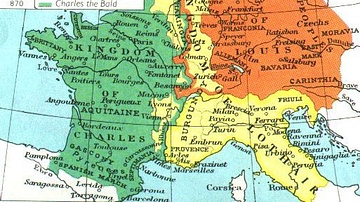
Division of the Carolingian Empire in 843 & 870 CE
Map of the Carolingian empire following its division in the 9th Century CE. The Treaty of Verdun in 843 CE partitioned the Kingdom of the Franks into West Francia (green), East Francia (orange), and...

Video
Marriage in the Ancient Roman Empire
Love, sex, and marriage in ancient Rome were defined by the patriarchy. The head of the household was the father (the pater familias) who had complete control over the lives of his wife, children, and slaves. This...

Image
Map of the Growth of Christianity in the Roman Empire - From Early Communities to Imperial Christianity, 30–451
The growth of Christianity in the Roman Empire from the 1st to the 5th centuries transformed a small religious movement rooted in Roman Judaea into one...
Article
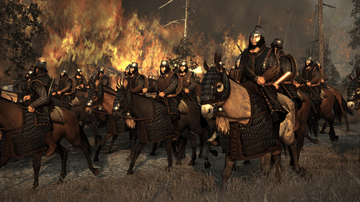
The Battle of the Catalaunian Fields
The Battle of the Catalaunian Fields (also known as The Battle of Chalons, The Battle of Maurica) was one of the most decisive military engagements in history between the forces of the Roman Empire under Flavius...

Definition
Ashur - The First Great Assyrian City
Ashur (also known as Assur) was an Assyrian city located on a plateau above the Tigris River in Mesopotamia (today known as Qal'at Sherqat, al-Shirqat District, northern Iraq). The city was an important center...

Definition
Babylon - The Gate of the Gods
Babylon is the most famous city from ancient Mesopotamia, whose ruins lie in modern-day Hillah, Iraq, 59 miles (94 km) southwest of Baghdad. The name is derived from bav-il or bav-ilim, which in Akkadian meant "Gate...

Article
The Gold Trade of Ancient & Medieval West Africa
West Africa was one of the world's greatest producers of gold in the Middle Ages. Trade in the metal went back to antiquity but when the camel caravans of the Sahara linked North Africa to the savannah...
