
Search
Remove Ads
Advertisement
Search Results

Article
Buddhism in Ancient Korea
Buddhism, in Korean Bulgyo, was introduced by monks who visited and studied in China and then brought back various Buddhist sects during the Three Kingdoms period. It became the official state religion in all Three Kingdoms...
Article
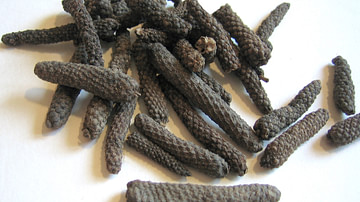
Middle Eastern Power Shifts & the Trade of Pepper from East to West
Pepper has long been the king of spices and for almost 2,000 years dominated world trade. Originating in India, it was known in Greece by the 4th century BCE and was an integral part of...
Article
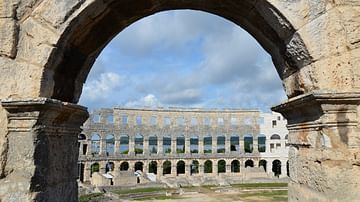
Exploring Classical Pula, Croatia
Located at the southern tip of the Istrian peninsula, Croatia’s westernmost outcrop, Pula is a town of extraordinary beauty with a 3000-year history. This important Istrian port boasts a rich and varied cultural...

Article
Global Trade in the 13th Century
In the 13th century, astonishing quantities of spices and silk passed from the Far East to Europe. Exact amounts are not known, but spice popularity in both cuisine and medicine reached its historical peak during...

Article
Dolmens of Ancient Korea
Dolmens (in Korean: koindol or chisongmyo) are simple structures made of monolithic stones erected during the late Neolithic period or Korean Bronze Age (1st millennium BCE). In ancient Korea they appear most often near...
Article
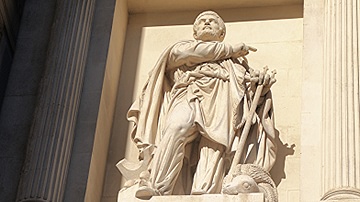
On the Ocean: The Famous Voyage of Pytheas
Sometime around 330 BCE, Pytheas, a little-known Greek merchant, embarked on an astonishing voyage. It was a voyage that would take him far beyond the known boundaries of the Mediterranean, into lands thought...

Article
The Horse-rider Theory in Ancient Japan
The 'horse-rider theory' is a controversial proposal that Japan was conquered around the 4th or 5th century CE by a culture from northern Asia to whom the horse was especially important. Although archaeological...
Article
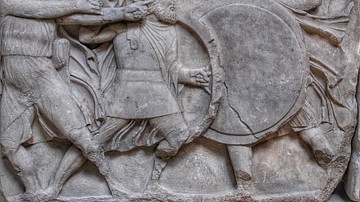
The Grand Strategy of Classical Sparta
In ancient Lacedaemon, as in all enduring political communities, there was a symbiotic relationship between the form of government chosen, the way of life that this form of government fostered, and the grand...

Article
Battle of the Nile
The Battle of the Nile (1-2 August 1798), or the Battle of Aboukir Bay, saw a British fleet led by Rear-Admiral Sir Horatio Nelson (1758-1805) destroy a French fleet at Aboukir Bay near the Rosetta mouth of the Nile River. It...
Article
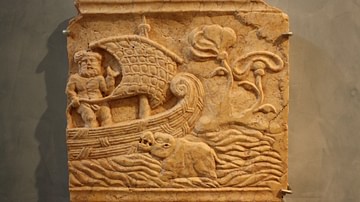
Roman Shipbuilding & Navigation
Unlike today, where shipbuilding is based on science and where ships are built using computers and sophisticated tools, shipbuilding in ancient Rome was more of an art relying on rules of thumb, inherited techniques...
