
Search
Remove Ads
Advertisement
Search Results
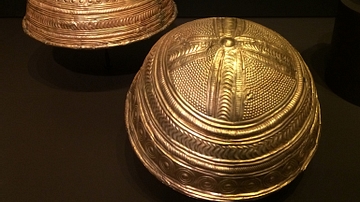
Image
Late Bronze Age Iberian Bowls
These bowls are from the Late Bronze Age settlement of Axtroki (Bolibar, Excoriatza, Guipúzcoa), Spain and are made from pure gold. When they were found, one bowl was inside the other. It has recently been suggested...
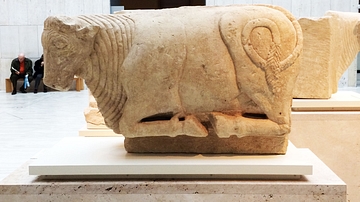
Image
Iberian Bull Statue
This limestone statue of a bull comes from Osuna (Seville), Spain. It dates from the late 5th century CE. It was originally abutted to a funerary monument. Bulls were protectors of tombs, symbols of masculinity, and they were...
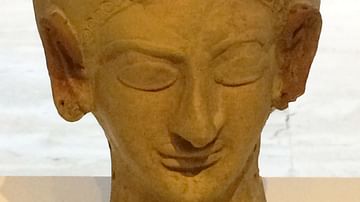
Image
Iberian Mask of a Woman
Mass produced in moulds, objects like this mask of a woman are inspired by Sicilian and Carthaginian models. They may have been used as offerings, images of a deity from the Phoenician-Punic pantheon, or apotropaic objects...
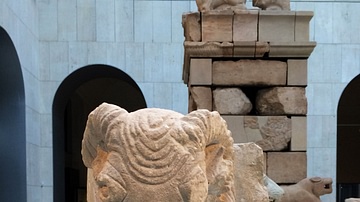
Image
Iberian Ram Protome
Believed to be an architectural element, specifically a corbel supporting an architrave or adorning a door jamp, this ram protome is made of limestone and dates from the 2nd-1st century BCE. It comes from Osuna (Seville), Spain...
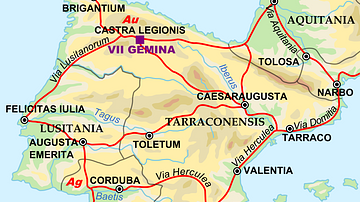
Image
Map of the Iberian Penninsula in 125 AD
A map showing Iberian peninsula in 125 AD including important roads, locations of legions and gold (Au) and silver (Ag) mines.

Video
Rock Art of the Mediterranean Basin on the Iberian ... (UNESCO/NHK)
The late prehistoric rock-art sites of the Mediterranean seaboard of the Iberian peninsula form an exceptionally large group. Here the way of life during a critical phase of human development...
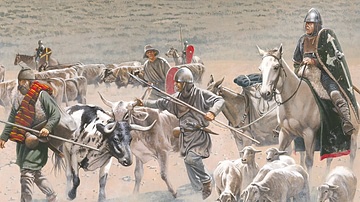
Image
El Cid Plundering the Iberian Countryside
Illustration of El Cid's (1043-1099 CE) men plundering the Iberian countryside by Zvonimir Grbasic. Courtesy of Medieval Warfare Magazine / Karwansaray Publishers.
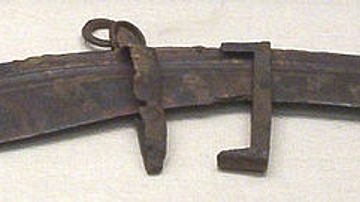
Image
Iberian Falcata Sword
An Iberian falcata sword, 399-200 BCE. (National Archeological Museum of Spain, Madrid)
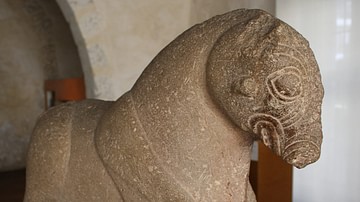
Image
Iberian Bull Sculpture
Iberian-Celtic bull sculpture from Saguntum (Sagunto), Spain. 4th century BCE. (Archaeological Museum, Sagunto)
Image
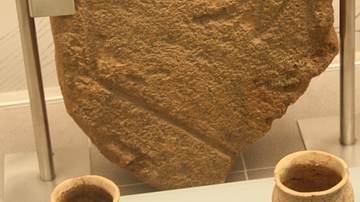
Iberian Funeral Stela
An Iberian funeral stela from Empuries. The design shows a a coiled iron spear or soliferreum, an action which was customary on burial. 6th century BCE. (Archaeological Museum, Empuries, Spain)
