
Search
Remove Ads
Advertisement
Search Results

Article
The Gold of the Conquistadors
The staggering quantity of gold the conquistadors extracted from the Americas allowed Spain to become the richest country in the world. The thirst for gold to pay for armies and gain personal enrichment resulted in...
Article
The Sea Dogs - Queen Elizabeth's Privateers
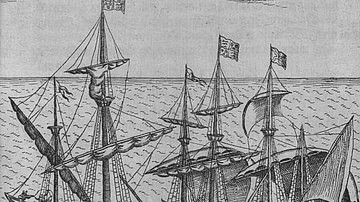
The sea dogs, as they were disparagingly called by the Spanish authorities, were privateers who, with the consent and sometimes financial support of Elizabeth I of England (r. 1558-1603 CE), attacked and...

Article
Slavery in Plantation Agriculture
The first plantations in the Americas of sugar cane, cocoa, tobacco, and cotton were maintained and harvested by African slaves controlled by European masters. When African slavery was largely abolished in the mid-1800s...

Article
Treasure & Booty in the Golden Age of Piracy
During the Golden Age of Piracy (1690-1730), pirates were first and foremost after gold, silver, and jewels, but if these could not be grabbed, then a ship’s cargo would be taken for resale at a pirate haven...

Article
The Iberian Conquest of the Americas
European explorers began to probe the Western Hemisphere in the early 1500s, and they found to their utter amazement not only a huge landmass but also a world filled with several diverse and populous indigenous...

Article
Treasure Ports of the Spanish Main
The treasure ports of the Spanish Main such as Cartagena, Portobelo, Panama, and Veracruz were used to collect the riches the Spanish Empire had extracted from the Americas, ready for transport in the two annual...

Image
Map of the Voyages of Christopher Columbus 1492-1504
Christopher Columbus (c. 1451–1506) led four transatlantic expeditions between 1492 and 1504 under the patronage of Ferdinand II of Aragon and Isabella I of Castile. His goal was to find a westward...

Image
Map of the Spanish Main & Golden Age of Piracy - Treasure Fleets, Buccaneers & Pirate Havens, c. 1650–1730
Between c. 1650 and 1730, the Caribbean formed the maritime heart of Spain’s American empire and one of the principal arenas of European imperial rivalry...
Image
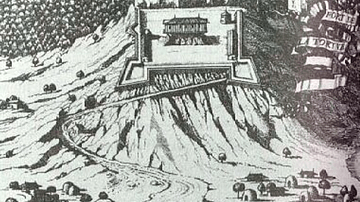
Vasseur's Fortress, Tortuga
The fortress built by Jean Le Vasseur from 1642 on the island of Tortuga (Ile de la Tortue), located in northwest Hispaniola (modern Haiti and the Dominican Republic). Tortuga became a major haven for the buccaneers like...

Image
Massacre at Cumaná
A 17th-century illustration showing the massacre of the Spanish community at Cumaná on Hispaniola in 1515. The community was an attempt at a more peaceful rule over indigenous peoples.
