
Search
Remove Ads
Advertisement
Search Results

Article
Twelve Gods of Persian Mythology
Ancient Persian Mythology is the term now referencing ancient Iranian religion prior to the rise of Zoroastrianism between c. 1500-1000 BCE. This was a polytheistic faith with a pantheon led by the supreme god Ahura...

Image
Statue of the Hindu Godess Durga
This statue depicts the Hindu goddess Durga fighting demons. It is made from stone and dates from the 11th century CE during the rule of the Hoyshala dynasty. It was likely made in the vicinity of Mysore, in Karnataka...

Article
Magic Rings in Norse Mythology
Elements of Norse mythology abound in The Lord of the Rings, and none is so compelling as the ring itself. The One Ring is reminiscent of magic rings in Norse lore, especially Odin's Draupnir or Andvaranaut from the...

Article
A Visual Who's Who of Greek Mythology
Achilles The hero of the Trojan War, leader of the Myrmidons, slayer of Hector and Greece's greatest warrior, who sadly came unstuck when Paris sent a flying arrow guided by Apollo, which caught him in his...

Article
Elves & Dwarves in Norse Mythology
Elves and dwarves represent minor divine figures in Norse mythology. Elves (álfar) and dwarves (dvergar) have in common their talent for creating precious objects, skill, agility, and moral ambiguity. Dwarves appear...

Video
The Hindu Temple
An introduction to the art and architecture of the Hindu temples of India.

Definition
Gupta Architecture
The Gupta Dynasty (4th-6th century) in North Central India saw the first purpose-built Hindu (and also Buddhist) temples which evolved from the earlier tradition of rock-cut shrines. Adorned with towers and elaborate carvings...

Video
Masterpiece: The Hindu Deities Shiva and Parvati
Apart from their damaged limbs, these 1,000-year-old Cambodian sculptures survive in excellent condition, and the fact that they have remained together makes them rare. These statues would have been in...
Definition
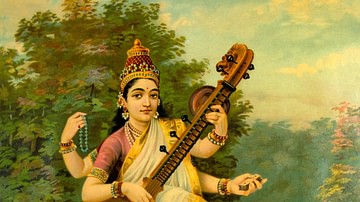
Saraswati
Saraswati (also Sarasvati) is the Hindu goddess of learning, wisdom, music, and aesthetics. She is also known as Bharati (eloquence), Shatarupa (existence), Vedamata ('mother of the Vedas'), Brahmi, Sarada, Vagisvari, and Putkari...

Definition
The Vedas
The Vedas are the religious texts which inform the religion of Hinduism (also known as Sanatan Dharma meaning “Eternal Order” or “Eternal Path”). The term veda means “knowledge” in that they are thought to contain the fundamental knowledge...
