
Search
Did you mean: Greek Fire?
Remove Ads
Advertisement
Search Results

Video
Ares the God of War in Greek Mythology
Ares was the god of war in Ancient Greek mythology and is described in Hesiod’s Theogony as shield-piercing Ares and City-sacking Ares. Ares was the god of the brutal, violent and bloody side of war, and loved...

Video
Medusa, the Snake Haired Gorgon in Greek Mythology
The mortal Medusa along with her two immortal sisters Stheno and Euryale are known as the Gorgons and were born to the sea god Phorcys and the sea goddess Ceto in Greek mythology. All three of the gorgons...
Collection
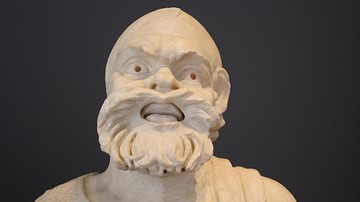
Comedy & Tragedy: the Drama of Greek Theatre
Greek theatre likely sprang from the lyrical performance of ancient epic poetry and the rituals performed in the worship of the god Dionysos where goats were sacrificed and participants wore masks. From...

Definition
Paul Cézanne
Paul Cézanne (1839-1906) was a French post-impressionist artist. Although he struggled for recognition in his own lifetime and often lacked confidence in his work, the artist's unique style, use of light and colour, and his interest...

Video
Hades, Tartarus and the Underworld in Greek Mythology
The Greek God Hades was born to the Titans Rhea and Cronus, and along with his siblings Hestia, Demeter, Hera and Poseidon, they were swallowed by their father (except Zeus). After the battle known...

Interview
Interview: Pre-Raphaelites: Modern Renaissance
Pre-Raphaelites: Modern Renaissance marks the first multidisciplinary exhibition in Italy to examine the profound impact of Italian Renaissance art on the Pre-Raphaelite movement, which flourished in Victorian...

Article
The Hellenistic World: The World of Alexander the Great
The Hellenistic World (from the Greek word Hellas for Greece) is the known world after the conquests of Alexander the Great and corresponds roughly with the Hellenistic Period of ancient Greece...

Definition
Augsburg Confession
The Augsburg Confession is the affirmation of faith of the Lutheran Church written by Philip Melanchthon (l. 1497-1560) and presented at the Diet of Augsburg in June 1530. The document attempted to reconcile differences between...

Video
Ancient Greek Tragedy: History, Playwrights and Performances
Not just the origins of Ancient Greek tragedy, but the origins of theatre itself traces back to classical Athens in the 6th century BCE. Greek theatre was performed in an open-aired venue called...

Video
Hygeia, Asclepius, and the Ancient Greek Deities of Healing
Apollo, although the god of medicine, wasn't the only deity in Greek mythology associated with healing, with many different deities in Ancient Greece including Hygeia and Asclepius, having responsibilities...
