
Search
Did you mean: Gades?
Remove Ads
Advertisement
Search Results

Image
Sassanian Silver Plate with the Goddess Anahita
Silver plate with a full-length female figure standing in its center. She holds an arch above her head. Grapevines grow from the ends of the arch and fill the space around the figure. The female figure...
Image
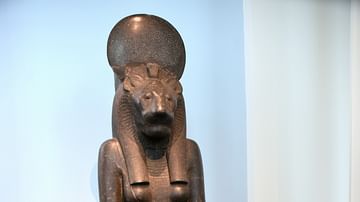
Statue of a Sitting Figure of Goddess Sekhmet
Sekhmet was a lion goddess, whose name means "the mighty one", and she personified the aggressive aspects of other goddesses. Sekhmet was a daughter of the sun god Ra. She usually wears the sun-disc on...
Image
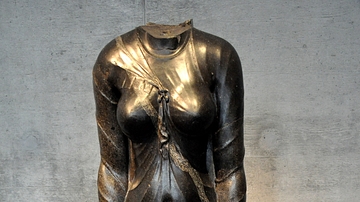
Statue of Goddess Isis
Granite statue of the standing-striding figure of the goddess Isis; her head is lost. Ptolemaic period, 3rd century BCE. (State Museum of Egyptian Art, Munich, Germany).

Image
Head of the Goddess Anahita
Head from a bronze cult statue of Anahita, a local goddess shown here in the guise of Aphrodite. From Satala, Armenia minor, c. 200-100 BCE.
The British Museum, London.
Image
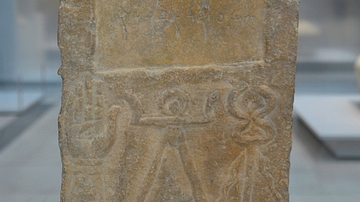
Punic Stele with Goddess Tanit
Punic stele with a crescent moon and the sign of the Phoenician goddess of fertility Tanit, found in Cirta (ancient Constantine, Algeria), around 300-200 BCE. Now in Louvre Lens, France.

Image
The Goddess Isis
Statue of the Egyptian goddess Isis. Made of tamarisk wood, covered in bronze and glass. Date unknown. Louvre Museum, Paris, France.
Image
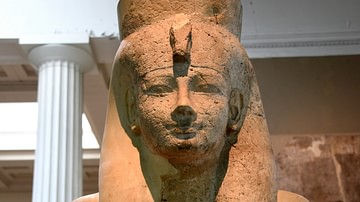
The Goddess Hathor
This bust comes from a triad statue that showed King Amenhotep III flanked by the god Osiris and the goddess Hathor. It is one of the numerous statues that adorned Amenhotep III's mortuary temple at Thebes. Some 150 years later...
Image
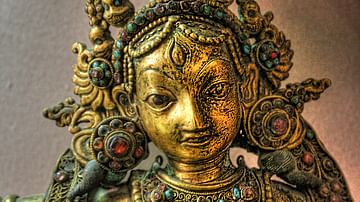
The Goddess Tara
Hindu-Buddhist goddess Tara, 15-16th century.
Ganga State Museum, Bikaner, India.
Image
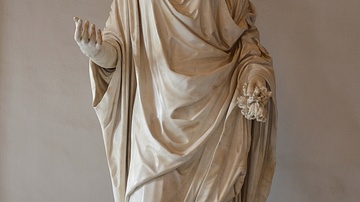
Roman Goddess Flora
Flora was the Roman goddess of flowers, vegetation and fertility. Spring was her season and her temple stood near the Circus Maximus in Rome. Her festival, called the Floralia, was instituted in 238 BCE. This Roman artwork...
Image
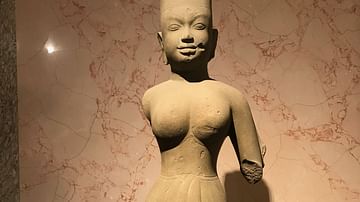
Ancient Statue of Goddess Uma
This ancient statue of the Hindu goddess Uma (Parvarti) is rendered in the pre-Angkor style of Prasat Andet. It comes from Cambodia, it is made from standstone, and it dates to the late 7th or early 8th century CE...
