
Search
Did you mean: Gades?
Remove Ads
Advertisement
Search Results

Image
The Norse Goddess Sif
The Norse Goddess Sif as imagined by English artist John Charles Dollman in the illustration of page 64 of Myths of the Norsemen from the Eddas and Sagas by Guerber, H. A., Harrap, London, 1909. The figure in the background...
Image
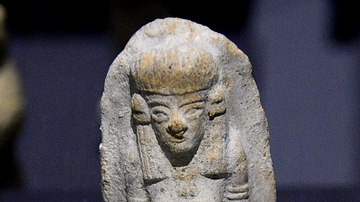
Naked Goddess from Ancient Cyprus
This terracotta figure of a naked goddess probably came from Tamassos, Cyprus. Cypro-Archaic, 600-480 BCE. (National Museum of Ireland-Archaeology, Dublin, Republic of Ireland)
Image
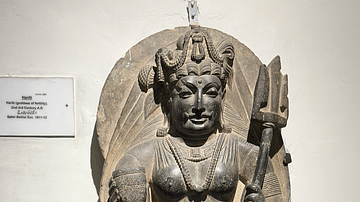
Hariti, Goddess of Fertility
Hariti, goddess of fertility, 2nd-3rd century, Sahri Bahlol Excavation, 1911-12.
Peshawar Museum, Pakistan.
Image
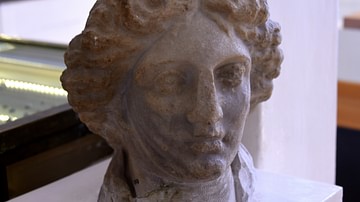
Head of Goddess Artemis
Marble head of Artemis, the Greek goddess of the hunt, forests and hills, and archery, from Pella, the Jordan Valley, modern-day Jordan Hashemite Kingdom, 1st century CE.
Jordan Archaeological Museum, Amman.
Image
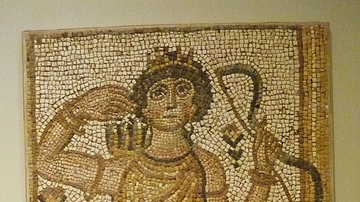
Floor Mosaic with the Goddess Artemis
This floor mosaic with the goddess Artemis is made of limestone tesserae and was made in the Eastern Mediterranean, c. 400-500 CE. (Royal Ontario Museum, Toronto)
Image
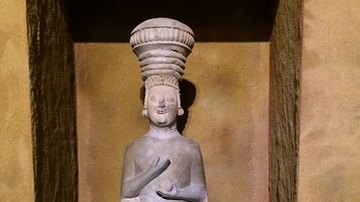
Phyrigian Goddess Cybele, Ankara
Representative statue of the Phyrigian Goddess Cybele, exhibited in the Museum Of Anatolian Civilizations. Ankara province, Turkey.
Image
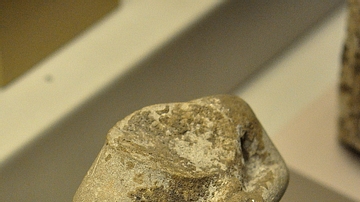
Statue Dedicated to the Goddess Ninshubur
The cuneiform inscriptions on the back of this gypsum statue mention that this statue was dedicated by Enzi and his son Amar-kiku to the goddess Ninshubur at the city of Der. From southern Mesopotamia (modern-day...
Image
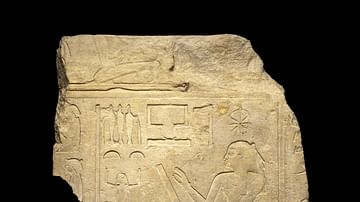
Seshat, Goddess of Writing
A limestone relief slab depicting Seshat, the Egyptian goddess of writing. ca. 1919-1875 BCE. (Brooklyn Museum, USA).
Image
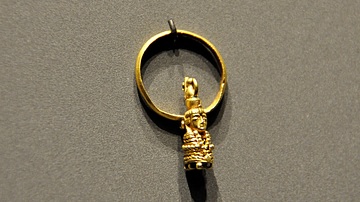
Shield Ring with Goddess Mut
Golden shield ring with a bust of the goddess Mut. From the treasure of the Nubian queen Amanishakheto, pyramid N6, Meroe, modern-day northern Sudan. Meroitic period, around 1 CE. (State Museum of Egyptian Art, Munich...
Image
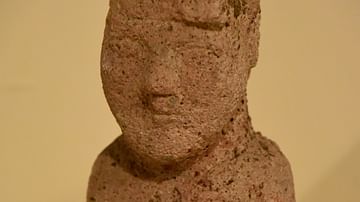
Bust of Goddess Cybele from Gordium
This is a limestone bust of the goddess Cybele. 6th century BCE. From Gordium (or Gordion), the capital city of ancient Phrygia. (Museum of Archaeology, Istanbul, Turkey).
