
Search
Remove Ads
Advertisement
Search Results
Definition
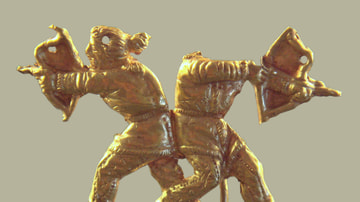
Scythian Warfare
Scythian warfare used state-of-the-art recurve bows and hit-and-run tactics against set infantry formations. Working from nimble horses, Scythian warriors could unleash a cloud of lethal arrows. Known, too, for their innovative...

Article
Elephants in Greek & Roman Warfare
In the search for ever more impressive and lethal weapons to shock the enemy and bring total victory the armies of ancient Greece, Carthage, and even sometimes Rome turned to the elephant. Huge, exotic, and frightening...

Article
Chariots in Ancient Indian Warfare
The chariot was the elite arm of ancient Indian armies in the Vedic (1500 BCE – 1000 BCE) and Epic periods (described by the Ramayana and the Mahabharata, 1000-600 BCE) because of the advantages it conferred and...

Definition
Ancient Persian Warfare
The ancient Persian military evolved from the earlier armed forces of the Medes which, in turn, developed from the warrior class of the indigenous people of the Iranian Plateau, the Aryan migrants (including the Persians...

Article
Siege Warfare in Medieval Europe
Siege tactics were a crucial part of medieval warfare, especially from the 11th century CE when castles became more widespread in Europe and sieges outnumbered pitched battles. Castles and fortified cities offered...

Article
Fortifications in Ancient Chinese Warfare
While ancient Chinese warfare was often characterised by large armies in pitched battles, siege warfare and the sacking of cities were also regular features. Huge earth walls with towers and encircling ditches...

Image
Germanic Forces Cross the Rhine, 406 CE
Germanic forces cross the Rhine and invade the Roman Empire in 406 CE. Illustration by Zvonimir Grbasic.
Article
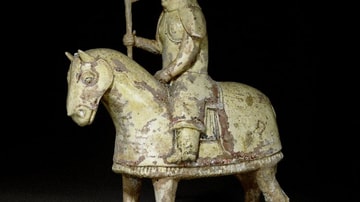
Cavalry in Ancient Chinese Warfare
The use of cavalry in Chinese warfare was a significant development which was largely responsible for the abandonment of chariots, that vehicle being much slower and more cumbersome to manoeuvre in battle conditions...

Article
Roman Warfare in the Age of Pyrrhus
The Roman army fought many conflicts throughout its long history, though perhaps none so indelible as the Pyrrhic War from 280 to 275 BCE. This war between Rome and a league of Greek colonies in southern Italy...

Image
Germanic Legend Panel from the Franks Casket
This replica panel (the original is the Museo Nazionale del Bargello, Florence, Italy) refers to a lost Germanic legend about a figure called Hos who, the runic inscriptions relates, is made to suffer by...
