
Search
Remove Ads
Advertisement
Search Results

Article
Mesopotamian Effects on Israel During the Iron Age
The Iron Age in the traditional Ancient Near Eastern chronology ranges from somewhere around 1200 BCE to 333 BCE. It begins from the era when it was first thought iron came to be used up to the ascendency of Alexander the Great as the major...

Article
Sources of History
History (from the Greek ἱστορία, meaning 'a learning or knowing by inquiry') can be broadly taken to indicate the past in general but is usually defined as the study of the past from the point at which there were written sources onwards...
Article
To what extent is Polybius our best guide to Hellenistic history?
To call Polybius our best guide to Hellenistic history might be misleading for a few reasons. Firstly, Polybius' Histories are by no means perfect; for a start, as they have come down to us, they are incomplete. To term it 'the best' implies...

Definition
Roman Art
The Romans controlled such a vast empire for so long a period that a summary of the art produced in that time can only be a brief and selective one. Perhaps, though, the greatest points of distinction for Roman art are its very diversity...
Definition
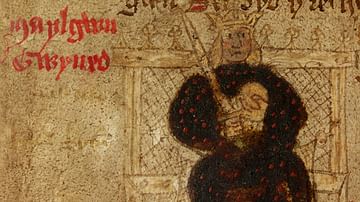
Maglocunus
Maglocunus, known as Maelgwn Gwynedd in Welsh (d. c. 547), was a 6th-century monarch based in Gwynedd, in north-western Wales. Maglocunus' name means "princely hound", and he expanded his influence to become one of the pre-eminent rulers...
Article
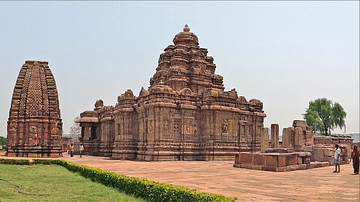
The Temples of Pattadakal
The history of Pattadakal goes back to a time when it was called Kisuvolal, a valley of red soil. It even found a mention in Ptolemy's Geography in the 2nd century CE. Presently Pattadakal is located in the district of Bagalkot, state of...

Article
The Ajanta Caves
The 30 caves at Ajanta lie to the north of Aurangabad in the Indhyadri range of Western Ghats. The caves, famous for their temple architecture and many delicately drawn murals, are located in a 76 m high, horseshoe-shaped escarpment overlooking...

Article
The Athenian Calendar
The term “Athenian Calendar” (also called the “Attic Calendar”) has become somewhat of a misnomer, since Ancient Athenians never really used just one method to reckon the passage of time. Athenians, especially from the 3rd Century BCE forward...

Article
Hadrian's Travels
No other Roman emperor travelled as much as Hadrian (r. 117-138 CE). The 'restless' emperor spent more time travelling than in Rome, devoting half of his 21-year reign to the inspection of the provinces. His travels provided him with the...

Article
Interview with Barry Strauss: Jews vs. Rome - The Latest Book by Barry Strauss
For over two centuries, ancient Judea was a restless province of the Roman Empire, marked by rebellions, shifting loyalties, and the tensions between imperial might and local identity. In his latest book, Jews vs. Rome: Two Centuries of Rebellion...
