
Search
Did you mean: Eridu?
Remove Ads
Advertisement
Search Results

Definition
Inanna - The Most Popular Goddess of Ancient Mesopotamia
Inanna is the ancient Sumerian goddess of love, sensuality, fertility, procreation, and also of war. She later became identified by the Akkadians and Assyrians as the goddess Ishtar, and further...

Definition
Enki - The Tricky Sumerian God of Wisdom
Enki (also known as Ea, Enkig, Dis, Nagbu, Nissiku Nudimmud) was the Sumerian god of wisdom, freshwater, intelligence, trickery and mischief, crafts, magic, exorcism, healing, creation, virility, fertility...

Article
Burial in Ancient Mesopotamia - Respect for the Living, Honoring the Dead
Burial in ancient Mesopotamia was the practice of interring a corpse in a grave or tomb while observing certain rites, primarily to ensure the passage of the soul of the deceased to...

Definition
Ereshkigal - Mesopotamian Queen of the Dead
Ereshkigal (also known as Irkalla and Allatu) is the Mesopotamian Queen of the Dead, who rules the underworld. Her name translates as "Queen of the Great Below" or "Lady of the Great Place." She was responsible...

Definition
Utu-Shamash - Sumerian God of the Sun and Justice
Utu-Shamash (also known as Babbar, Samas, Shamash, and Utu) is the Sumerian god of the sun and divine justice. He is the son of the moon god Nanna and the fertility goddess Ningal in the Sumerian tradition...

Article
The Death of Gilgamesh
The Death of Gilgamesh is a Sumerian poem relating the death and afterlife of the famous hero-king of Uruk, who had become a legendary figure. The piece is dated to before the Ur III Period (2047-1750 BCE), and although its...
Article
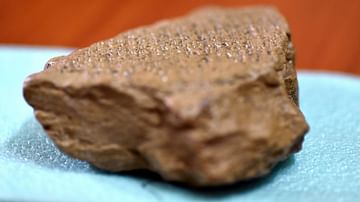
The Newly Discovered Tablet II of the Epic of Gilgamesh
Surpassing all other kings, heroic in stature, brave scion of Uruk, wild bull on the rampage! Going at the fore he was the vanguard, going at the rear, one his comrades could trust...

Definition
Mythology
Myths are a part of every culture in the world and are used to explain natural phenomena, where a people came from and how their civilization developed, and why things happen as they do. At their most basic level, myths comfort by...

Definition
Philosophy
The word philosophy comes from the Greek philo (love) and sophia (wisdom) and so is literally defined as “the love of wisdom”. More broadly understood, it is the study of the most basic and profound matters of human existence. Philosophical...

Definition
Mesopotamian Literature - The Earliest Works of the Imagination
Ancient Mesopotamian literature developed circa 2600 BCE after scribes, who had formerly been record-keepers, began composing original works in the region of Sumer. The Sumerians invented writing...
