
Search
Remove Ads
Advertisement
Search Results

Definition
Han Dynasty
The Han Dynasty (202 BCE - 220 CE) was the second dynasty of Imperial China (the era of centralized, dynastic government, 221 BCE - 1912 CE) which established the paradigm for all succeeding dynasties up through 1912 CE. It succeeded...

Definition
Marie Antoinette
Marie Antoinette (l. 1755-1793) was the queen of France during the turbulent final years of the Ancien Régime and the subsequent French Revolution (1789-1799). With the ascension of her husband Louis XVI of France (r. 1774-1792...

Definition
Indian Princely States
The Indian Princely states (aka Native States or Princely India) were those states in the Indian subcontinent the British did not conquer but which were typically bound by treaty first to the East India Company and then to...

Definition
Longmen Grottoes
The Longmen Grottoes, a Buddhist cave complex located 13 kilometers south of Luoyang in China's Henan province, form some of the most significant and exquisite representations of ancient Chinese stone art. Created over the course...
Definition
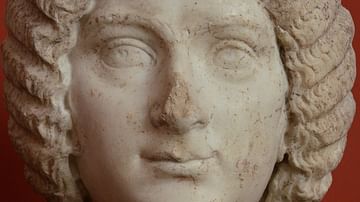
Julia Domna
Julia Domna (160-217 CE) was a Syrian-born Roman empress during the reign of her husband, Roman emperor Septimius Severus (r. April 193 - February 211 CE). She was also the mother of the emperors Geta (r. 209-211 CE) and Caracalla...

Definition
Henry I of England
Henry I reigned as the king of England from 1100 to 1135 CE. The son of William the Conqueror (r. 1066-1087 CE), Henry succeeded his brother William II of England (r. 1087-1100 CE) after he had died in a hunting accident and...

Definition
Titus Andronicus - Shakespeare's Bloodiest Play
Titus Andronicus is the earliest tragedy by William Shakespeare (l. c.1564-1616), probably written sometime between 1589 and 1593, and first performed in 1594. Infamous for its gratuitous violence and two-dimensional...

Image
12 Women Rulers of the Ancient World - Queens, Regents & Empresses Who Exercised State Power
Political power in the ancient world rested on dynastic legitimacy, control of court and military institutions, religious authority, and the ability to maintain stability...
Article
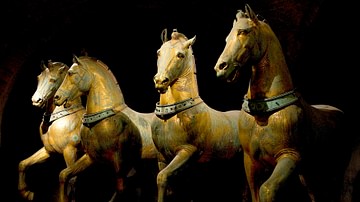
The Hippodrome of Constantinople
The Hippodrome of Constantinople was an arena used for chariot racing throughout the Byzantine period. First built during the reign of Roman emperor Septimius Severus in the early 3rd century CE, the structure was...

Article
Twelve Famous Women of the Middle Ages
Women in the Middle Ages were frequently characterized as second-class citizens by the Church and the patriarchal aristocracy. Women's status was somewhat elevated in the High and Late Middle Ages by the cult...
