
Search
Did you mean: Levant?
Remove Ads
Advertisement
Search Results

Definition
Nok Culture
The Nok culture, named after the settlement of the same name, flourished in southern West Africa (modern Nigeria) during the Iron Age from the 5th century BCE to the 2nd century CE. Famous for the distinctive terracotta sculptures...

Definition
Commodus
Commodus was Roman emperor from 180 to 192 CE. With the death of Roman Emperor Marcus Aurelius in March of 180 CE, the long reign of the five good emperors came to an end and with it so did the Pax Romana (the Roman Peace). Those emperors...

Definition
Bronze Age Aegean
The Bronze Age (c. 3000-1000 BCE) is the period when cultures were either using, producing, or trading bronze. Several cultures flourished around the Aegean Sea during this period: the Minoan civilization on Crete, the Mycenaean...

Definition
Ravana
Ravana is the mythical multi-headed demon-king of Lanka in Hindu mythology. With ten heads and twenty arms, Ravana could change into any form he wished. Representing the very essence of evil, he famously fought and ultimately lost a series...

Definition
Chang'an
Chang'an, located near modern Xian in Shaanxi Province, was the capital of several dynasties of ancient China from the Zhou to the Tang and eventually became one of the world's great metropolises. With regular tree-lined avenues, high...

Definition
Mycenaean Art
The Mycenaean civilization flourished in the late Bronze Age from the 15th to the 13th century BCE, and their artists would continue the traditions passed on to them from Minoan Crete. Pottery, frescoes, and goldwork skillfully...

Definition
Homo Habilis
Homo habilis ("handy man") is an extinct species of human that lived in East and South Africa between 2.3 and 1.5 million years ago and plays an interesting role in the discussion surrounding the dawn of our genus of Homo, which...
Definition
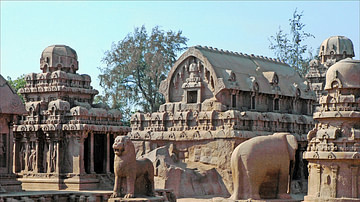
Mahabalipuram
Mahabalipuram or Mamallapuram is a historic city and UNESCO World Heritage site in Tamil Nadu, India. During the reign of the Pallava dynasty, between the 3rd century CE and 7th century CE, it became an important centre of art...

Definition
Brahmanism
Brahmanism (also known as Vedic Religion) is the belief system that developed from the Vedas during the Late Vedic Period (c. 1100-500 BCE) originating in the Indus Valley Civilization after the Indo-Aryan Migration c. 2000-1500 BCE...
Definition
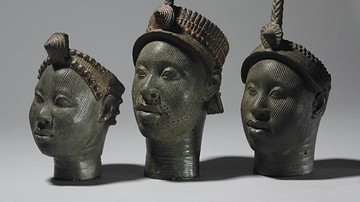
Ife
Ife (aka Ile-Ife) was an ancient African city which flourished between the 11th and 15th century CE in what is today Nigeria in West Africa. Ife was the capital and principal religious centre of the Yoruba kingdom of Ife, which prospered...
