
Search
Remove Ads
Advertisement
Search Results

Definition
Lycurgus
Lycurgus is considered the semi-mythical founder of classical Sparta and responsible for all of the city-state’s laws as well as its military and political institutions. He became better known to generations of Spartans as the lawgiver...

Definition
Gold in Antiquity
Gold, chemical symbol Au (from the Latin aurum meaning 'shining dawn'), is a precious metal which has been used since antiquity in the production of jewellery, coinage, sculpture, vessels and as a decoration for buildings, monuments...

Definition
Tughlaq Dynasty
The Tughlaq dynasty (also spelt Tughluq), ruled the Delhi sultanate from 1320 to 1413. Followed by the Khalji dynasty and preceded by the Sayyids, the Tughlaq dynasty formed an important period in the history and culture of the...
Definition
Tiye
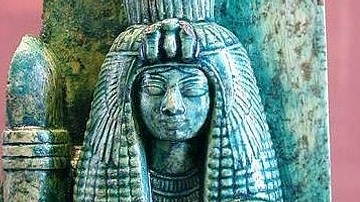
Tiye (also known as Tiy, 1398-1338 BCE) was a queen of Egypt of the 18th dynasty, wife of the pharaoh Amenhotep III, mother of Akhenaten, and grandmother of both Tutankhamun and Ankhsenamun. She exerted an enormous influence at the courts...

Definition
French Directory
The French Directory, or Directorate (French: le Directoire), was the government of France from 2 November 1795 until 9 November 1799, a period that spanned the last four years of the French Revolution (1789-1799). The Directory...

Definition
Hippocrates
Hippocrates was born on the Greek island of Kos in the 5th century BCE, and he became the most famous physician in antiquity. He established a medical school on the island, wrote many treatises on medical matters, and is, through...

Definition
Fates
The Fates (also known as the Moirai in Greek mythology) are three sister goddesses responsible for assigning destinies to mortals at their birth, a human's lifespan, and the timing of their death. The golden thread they spin represents...

Definition
Caligula - The First Mad Emperor of Rome
Caligula (12-41 CE) was the third Roman emperor, who reigned from 37 to 41 CE. A member of the Julio-Claudian Dynasty, he came to power after the death of his great-uncle Tiberius. The ancient sources claim...

Definition
Mesopotamian Literature - The Earliest Works of the Imagination
Ancient Mesopotamian literature developed circa 2600 BCE after scribes, who had formerly been record-keepers, began composing original works in the region of Sumer. The Sumerians invented writing...
Definition
Nerva
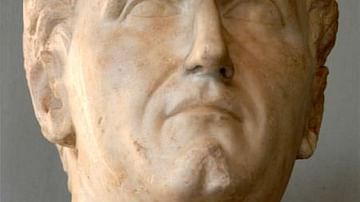
Marcus Cocceius Nerva was Roman emperor from 96 to 98 CE, and his reign brought stability after the turbulent successions of his predecessors. In addition, Nerva helped establish the foundations for a new golden era for Rome which his...
