
Search
Remove Ads
Advertisement
Search Results

Definition
Ming Porcelain
The porcelain of the Ming Dynasty of China (1368-1644 CE) benefitted, as did other arts, from the economic success of the 15th century CE, in particular, and the consequent surge in demand for quality handcraft production both...

Definition
Meiji Period
The Meiji period refers to the period in Japanese history from 1868 to 1912 during which the Meiji Emperor reigned. Following the overthrow of the Tokugawa shogunate in the Meiji Restoration of 1868, Japan's new leaders embarked...

Article
Ancestor Worship in Ancient China
Ancestor worship in ancient China dates back to the Neolithic period, and it would prove to be the most popular and enduring Chinese religious practice, lasting well into modern times. The family was always an important...

Definition
Gojoseon
Gojoseon (Gochoson or Old Choson) was an ancient kingdom which ruled northern Korea in the second half of the first millennium BCE. Gojoseon possessed the most advanced culture in the Korean peninsula at that time and was an important...

Definition
Taoism
Taoism (also known as Daoism) is a Chinese philosophy attributed to Lao Tzu (c. 500 BCE) which developed from the folk religion of the people primarily in the rural areas of China and became the official religion of the country under...
Definition
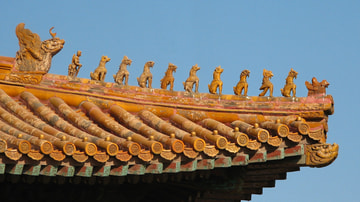
Ancient Chinese Architecture
Walled compounds, raised pavilions, wooden columns and panelling, yellow glazed roof tiles, landscaped gardens, and a careful application of town planning and use of space are all notable features of the architecture...

Definition
Memphis (Ancient Egypt)
Memphis was one of the oldest and most important cities in ancient Egypt, located at the entrance to the Nile River Valley near the Giza plateau. It served as the capital of ancient Egypt and an important religious cult...

Definition
Mongol Empire
The Mongol Empire (1206-1368) was founded by Genghis Khan (r. 1206-1227), first Great Khan or 'universal ruler' of the Mongol peoples. Genghis forged the empire by uniting nomadic tribes of the Asian steppe and creating a devastatingly...

Article
Swords in Ancient Chinese Warfare
Although the bow and crossbow were the weapons of choice for much of China's history, the sword played its part, especially when warriors were forced to dismount and face the enemy at close quarters. Widely used...

Article
Cavalry in Ancient Chinese Warfare
The use of cavalry in Chinese warfare was a significant development which was largely responsible for the abandonment of chariots, that vehicle being much slower and more cumbersome to manoeuvre in battle conditions...
