
Search
Did you mean: Tyre?
Remove Ads
Advertisement
Search Results

Article
The Battle of Gaugamela, 331 BCE
After securing the eastern Mediterranean seaboard and Egypt, Alexander the Great pushed east into Mesopotamia with the intention of bringing Darius to battle. After crossing the Euphrates River unopposed, he marched...

Article
The Portuguese Colonization of Cape Verde
The Portuguese colonization of the Cape Verde (Cabo Verde) Islands began from 1462. Initially envisaged as a base to give mariners direct access to West African trade, the Central Atlantic islands soon became...
Article
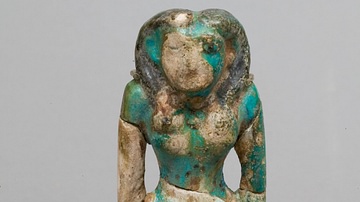
Tattoos in Ancient Egypt
Tattoos are an ancient form of art appearing in various cultures throughout history. One of the earliest (and possibly the oldest) pattern of tattoos in the world was discovered on the frozen remains of the man known as...

Article
The Great Palace of Constantinople
The Great Palace of Constantinople was the magnificent residence of Byzantine emperors and their court officials which included a golden throne room with wondrous mechanical devices, reception halls, chapels, treasury...

Article
Festivals in Ancient Egypt
The gods of the ancient Egyptians were always apparent to the people through natural events. The sunrise was Ra emerging from the underworld in his great ship, for example, and the moon was the god Khonsu traveling across...

Article
Top 5 Archaeological Sites in Lebanon
Home to some of the Middle East’s most majestic ancient ruins, Lebanon has a rich and varied heritage with over 5,000 years of recorded history. Over the millennia, different conquering empires have left their...

Article
The Wise Man of Chief Mountain
The Wise Man of Chief Mountain is an origin story of the Blackfeet nation explaining how they came to wear brightly colored clothing. Although Native American nations generally wore clothing dyed different colors...

Article
Paul's Journeys and the Mediterranean Trade
Mediterranean trade increased exponentially at the turn of the first millennium. During Rome's zenith, goods of all sorts began to move in all directions. As a common traveler aboard merchant ships, Paul...
Article
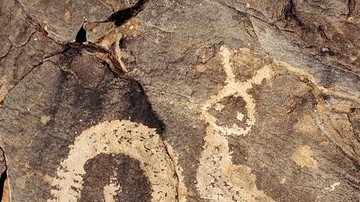
Ulunsuti Tales
The Ulunsuti tales of the Cherokee deal with the mystical jewel, the Ulunsuti ("transparent"), a diamond on the forehead of the great horned serpent Uktena. The Ulunsuti appears in several Cherokee legends, but the story is developed...

Article
The Capture of the Treasure Ship Madre de Deus
The treasure ship Madre de Deus (aka Madre de Dios) was a Portuguese vessel carrying hugely valuable cargo from the East Indies which was attacked and captured by a fleet of English privateers in the Azores...
