
Search
Did you mean: Darius I?
Remove Ads
Advertisement
Search Results

Definition
Byzantine Empire
The Byzantine Empire existed from 330 to 1453. It is often called the Eastern Roman Empire or simply Byzantium. The Byzantine capital was founded at Constantinople by Constantine I (r. 306-337). The Byzantine Empire varied in...

Definition
William II of England
William II of England, sometimes called William 'Rufus' for his red hair and complexion, reigned as the king of England from 1087 to 1100 CE. The son of William the Conqueror (r. 1066-1087 CE), the younger William was loyal...

Definition
Medieval Chivalry
In medieval Europe, a code of ethics known as chivalry developed which included rules and expectations that the nobility would, at all times, behave in a certain manner. Chivalry was, in addition, a religious, moral and social...

Definition
Constantine V
Constantine V, also known as Constantine the Dung-named by his enemies, was emperor of the Byzantine empire from 741 to 775 CE. He enjoyed military successes in the Middle East and Balkans but his reign is chiefly remembered for...

Definition
William the Conqueror
William the Conqueror (c. 1027-1087), also known as William, Duke of Normandy, led the Norman Conquest of England in 1066 when he defeated and killed his rival Harold Godwinson at the Battle of Hastings. Crowned King William...

Definition
Sir William Marshal - England's Greatest Knight
The Englishman Sir William Marshal (c. 1146-1219 CE, aka William the Marshal), Earl of Pembroke, is one of the most celebrated knights of the Middle Ages. Renowned for his fighting skills, he remained undefeated...

Definition
Theophilos
Theophilos was emperor of the Byzantine Empire from 829 to 842 CE. He was the second ruler of the Amorion dynasty founded by his father Michael II. Popular during his reign and responsible for a lavish rebuilding of Constantinople's...
Image
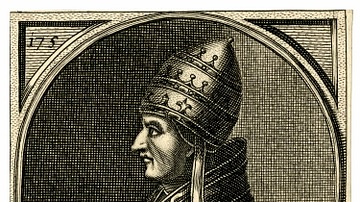
Pope Innocent III
Pope Innocent III (not to be confused with anti-pope Innocent III), r. 1198-1216 CE, is depicted in this print from Chronologia Summorum Romanorum Pontificum, published in 1675 CE. The text at the bottom reads "Innocent III...
Image
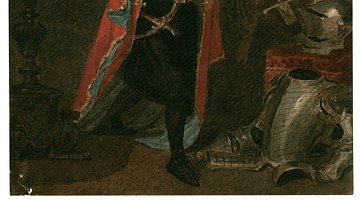
Richard III is Tormented by the Ghosts of His Victims - Richard III, Act V, Scene III
Richard III of England is tormented by the ghosts of his victims on the eve of his death at the Battle of Bosworth, in Act V Scene III of William Shakespeare's play The Tragedy...
Article
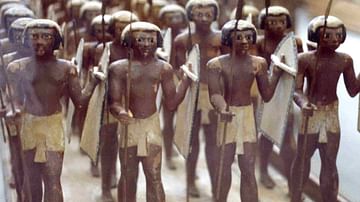
Weapons in Ancient Egypt
The ancient Egyptian military is often imagined in modern films and other media as a heavily armed and disciplined fighting force equipped with powerful weapons. This depiction, however, is only true of the Egyptian army...
