
Search
Did you mean: Darius I?
Remove Ads
Advertisement
Search Results

Definition
Ancient Persian Religion
Ancient Persian religion was a polytheistic faith which corresponds roughly to what is known today as ancient Persian mythology. It first developed in the region known as Greater Iran (the Caucasus, Central Asia, South...

Definition
Lysimachus
Lysimachus (c. 361-281 BCE) was one of Alexander the Great's trusted bodyguards and a member of his Companion Cavalry. Although he obtained Macedonian citizenship, his father was a Thessalian named Agathocles. After the death of Alexander...

Definition
Gorgo of Sparta
Gorgo was the queen of the Greek city-state of Sparta, daughter of the king Cleomenes (r. 520-490 BCE), wife of King Leonidas (r. 490-480 BCE), and mother of King Pleistarchus (r. 480-458 BCE). Her birth and death dates are unclear...
Definition
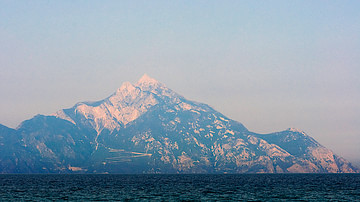
Mount Athos - The Byzantine Holy Mountain
Mount Athos, located on the Chalkidike peninsula near Thessalonica, Greece, is a holy site which first saw hermit monks living there in the 9th century CE. Regarded as one of the most important monastic sites...

Definition
Themistocles
Themistocles (c. 524 - c. 460 BCE) was an Athenian statesman and general (strategos) whose emphasis on naval power and military skills were instrumental during the Persian wars, victory in which ensured that Greece survived its greatest...

Definition
Athens
Athens, Greece, with its famous Acropolis, has come to symbolize the whole of the country in the popular imagination, and not without cause. It not only has its iconic ruins and the famous port of Piraeus but, thanks to ancient writers...

Article
Battle of Jena-Auerstedt
The twin battles of Jena and Auerstedt, both fought on 14 October 1806, marked a major turning point in the Napoleonic Wars (1803-1815). It saw the French Grande Armée, led by Emperor Napoleon I (r. 1804-1814; 1815) soundly...

Article
Polybius' Capture of Achaeus and Fall of Sardis
Polybius' Capture of Achaeus and Fall of Sardis is the account of the end of the Siege of Sardis (215-213 BCE) by Antiochus III (aka Antiochus the Great, r. 223-187 BCE) of the Seleucid Empire after the...

Article
The Royal Macedonian Tombs at Vergina
Excavations at Vergina in northern Greece in the late 1970s CE unearthed a cluster of tombs thought to be the burial site of Philip II (r. 359-336 BCE), the father of Alexander the Great (r. 336-323 BCE), with...

Video
SHAKESPEARE EXPLAINED Richard III Act 1 Scene 2
Richard III Act 1 Scene 2 explained in depth. Part of the Shakespeare Explained series, this video will help you to understand Shakespeare and what is being said in the play. This Shakespeare Explained...
