
Search
Remove Ads
Advertisement
Search Results
Definition
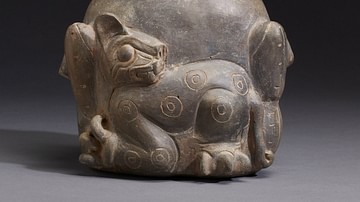
Chavin Civilization
The Chavin civilization flourished between 900 and 200 BCE in the northern and central Andes and was one of the earliest pre-Inca cultures. The Chavin religious centre Chavin de Huantar became an important Andean pilgrimage...

Definition
Gupta Architecture
The Gupta Dynasty (4th-6th century) in North Central India saw the first purpose-built Hindu (and also Buddhist) temples which evolved from the earlier tradition of rock-cut shrines. Adorned with towers and elaborate carvings...

Definition
Venus
In Roman mythology, Venus was the goddess of love, sex, beauty, and fertility. She was the Roman counterpart to the Greek goddess Aphrodite. However, Roman Venus had many abilities beyond the Greek Aphrodite; she was a goddess of victory...

Definition
The Anthesteria
The Anthesteria celebrated two seemingly disparate things: wine and the dead. Both Dionysos and Hermes Chthonios (Hermes of the Underworld) were celebrated as part of this festival. In many ways, the Anthesteria is similar to...

Definition
Ancient Ireland
Ireland is an island country located in the North Atlantic, bounded by the North Channel, the Irish Sea, and St. George's Channel. It is known as Eire in the Gaelic language, which comes from the old Irish Eriu, the name of a...

Definition
Sumer - The Cradle of Civilization
Sumer was the southernmost region of ancient Mesopotamia (modern-day southern Iraq and parts of Kuwait), which has long been considered the cradle of civilization. The name comes from Akkadian, the language of the...

Definition
Eridu - The Divine Birthplace of Kingship and Order
Eridu (present-day Abu Shahrein, Iraq) was considered the first city in the world by the ancient Sumerians and is among the most ancient of the ruins from Mesopotamia. Founded circa 5400 BCE, Eridu...

Definition
Middle Kingdom of Egypt - Ancient Egypt's Classical Age
The Middle Kingdom (2040-1782 BCE) is considered ancient Egypt's Classical Age, during which it produced some of its greatest works of art and literature. Scholars remain divided on which dynasties...
Definition
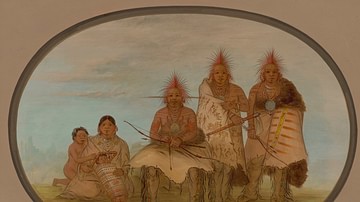
Pawnee
The Pawnee are a Native American nation of the Plains Indians culture originally from the region of modern Nebraska. Prior to the European colonization of the Americas, they were among the most powerful of the Plains Indian tribes numbering...
Definition
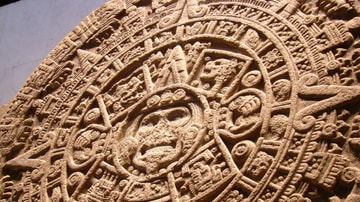
Tonatiuh
Tonatiuh, 'Turquoise Lord,' was the 5th and present sun in the Aztec view of the cosmos and the fierce sun god of several other Postclassic Mesoamerican cultures, including the Toltecs. It was thought that only the regular offering...
