
Search
Remove Ads
Advertisement
Search Results

Definition
Avesta
The Avesta is the scripture of Zoroastrianism which developed from an oral tradition founded by the prophet Zoroaster (Zarathustra, Zartosht) sometime between c. 1500-1000 BCE. The title is generally accepted as meaning “praise”, though...

Definition
Izanami and Izanagi
Izanami ('she who invites') and Izanagi ('he who invites') are the primordial gods of the Shinto religion who are believed to have created the islands of Japan and given birth to many of the other Shinto gods or kami. The...

Definition
Fire Temple
Fire Temples are places of worship in the Zoroastrian religion. They were known as ataskada (“house of fire”) by the Persians but are best known today by their Greek name pyratheia (fire temple). They are thought to have originated...

Definition
Lycurgus
Lycurgus is considered the semi-mythical founder of classical Sparta and responsible for all of the city-state’s laws as well as its military and political institutions. He became better known to generations of Spartans as the lawgiver...

Definition
Tiamat - The Great Mesopotamian Goddess of Chaos
Tiamat is the Mesopotamian goddess associated with primordial chaos and the salt sea, best known from the Babylonian epic Enuma Elish. In all versions of the myth, following the original, Tiamat always...
Definition
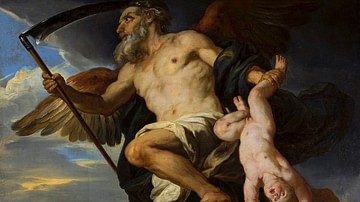
Cronus
In Greek mythology, Cronus (also spelt Kronos) is a Titan and the youngest son of Uranus (Heaven/Sky) and Gaia (Earth). He dethroned Uranus and became the world's first king, ruling over his siblings and fellow Titans. Cronus married...

Definition
Etruscan Art
The art of the Etruscans, who flourished in central Italy between the 8th and 3rd century BCE, is renowned for its vitality and often vivid colouring. Wall paintings were especially vibrant and frequently capture scenes of Etruscans...
Definition
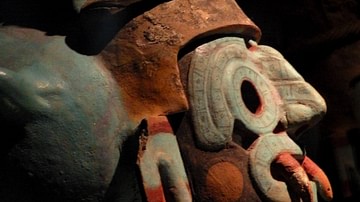
Tlaloc
Tláloc (pron. Tla-loc) is one of the most important and formidable gods in the Aztec pantheon. He was considered the god of rain, water, lightning and agriculture. Tlaloc was seen as both a benevolent god providing life-giving rain but...

Definition
Inca Civilization
The Inca civilization flourished in ancient Peru between c. 1400 and 1533 CE. The Inca Empire eventually extended across western South America from Quito in the north to Santiago in the south. It was the largest empire ever seen...

Definition
Michelangelo
Michelangelo (1475-1564 CE) was an Italian artist, architect and poet, who is considered one of the greatest and most influential of all Renaissance figures. His most celebrated works, from a breathtaking portfolio of masterpieces...
